
For wholesalers, importers, distributors, and project buyers, stainless steel kitchen sinks remain the backbone of the kitchen fixture category. But not all stainless steel is equal, and the grade specified in a purchase order has real consequences for corrosion resistance, food safety, and long-term customer satisfaction. This guide explains what 304 stainless steel actually is, how it compares with 201 and other grades, and how buyers can use grade selection as a sourcing tool rather than a marketing claim.
What Makes 304 Stainless Steel the Benchmark for Kitchen Sinks
Grade 304 is an austenitic stainless steel containing roughly 18–20% chromium and 8–10.5% nickel. That chemistry is what gives it superior resistance to corrosion and rust compared with lower-cost alternatives. Chromium forms a passive oxide layer on the surface that protects the steel beneath, while nickel stabilizes the austenitic structure and supports formability and weldability — both important in sink manufacturing.
For kitchen applications, 304 is widely recognized as food grade. It is chemically inert, so acidic foods such as lemons, tomatoes, or marinating fish do not trigger the chemical reaction that low-quality steel can produce, where metallic tastes or harmful substances may leach into food. That is why 304 is the practical benchmark for most indoor kitchen programs, from residential kitchens and rental properties to condos and apartments.
It is important to understand what grade does and does not tell you. The steel grade mainly changes the sink’s corrosion margin. It does not tell you whether the bowl drains well, whether the rim stays flat, whether the finish hides scratches, or whether the packaging survives export. Grade is a starting point, not a complete quality specification.
201 vs 304: Where the Cost Difference Comes From
Grade 201 replaces much of the nickel with manganese, which lowers production costs but also reduces durability. The two materials can look similar at first glance, yet 201-grade steel rusts more readily under sustained moisture and acidic exposure. For value-led ranges where the application and care expectations are controlled, a 201 sink can work. For most indoor kitchen programs, however, a well-made 304 sink is the safer specification.
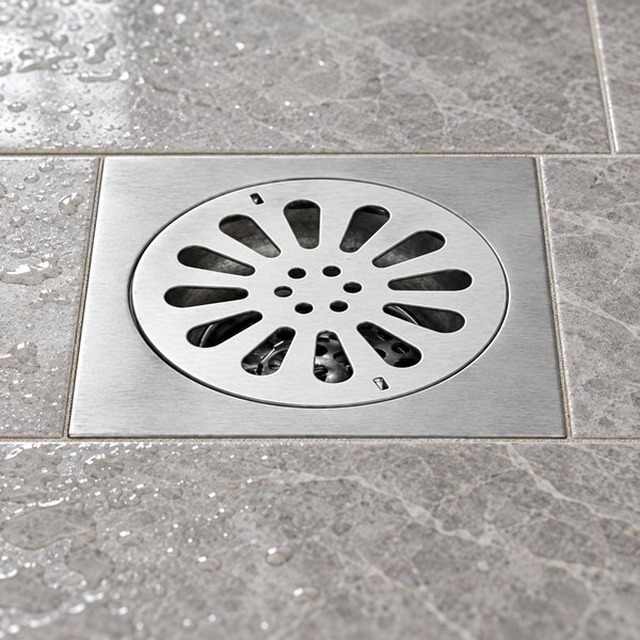
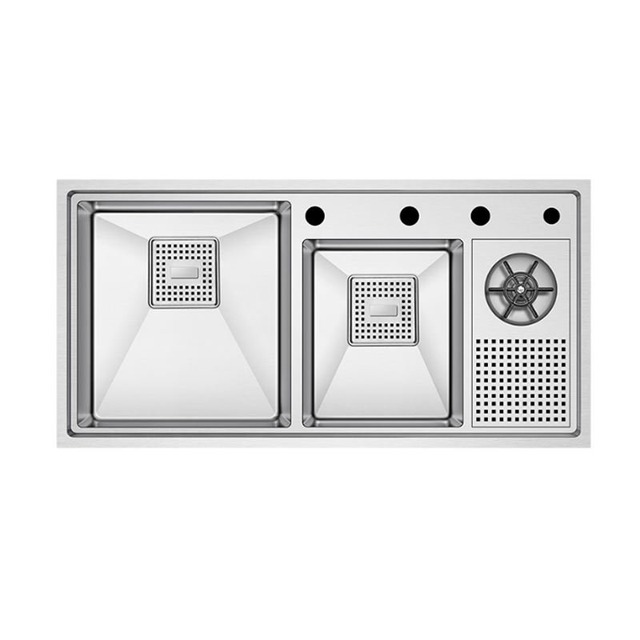
JOMOLA’s own catalogue reflects this tiering honestly. The Handmade Stainless Steel Sink 900x450mm Brushed (Model JDH-9045) and the Handmade Stainless Steel Sink 304 Brushed Double Bowl (Model FHD3621B, 36″ × 21″ × 10″ with two 16″ × 16″ bowls at 10″ depth) are both built from 304 stainless steel. The Pressed Stainless Steel Sink Undermount Single Bowl 304 (Model KUS2321, 23 1/2″ × 21″ with a 9″ bowl depth, available in 1.2 / 1.5 mm thickness) is likewise 304. In the drainage category, the Stainless Steel Floor Drain 150x150mm Satin Finish (Model YYD-15-1) is offered in either SUS 304 or SUS 201 with 2 mm or 3 mm thickness — a clear example of how material choice and thickness are quoted together.
Reading a Specification Beyond the Grade
Gauge and thickness should not be judged separately from the rest of the construction. A 304 sink with quality sound-deadening pads and undercoating performs very differently from a bare 304 bowl of the same gauge. Buyers should read the full specification: material grade, thickness, bowl depth, finish, and accessory package.
JOMOLA’s handmade sink range illustrates this. The JDH-9045 measures 900*450*230mm (35″*18″*9″) in a brushed silver finish and ships as a workstation-style package with a cup rinser, colander, cutting board, roll-up dish rack, bottom grid, and strainer. The FHD3621B double bowl pairs 304 construction with a brushed finish. On the pressed side, the KUS2321 features an all-satin surface with deck polish and bowl satin finish. These details — not the grade alone — determine how the sink performs in the field and how it is perceived on the showroom floor.
Finish care also matters for after-sales support. Baking soda is abrasive enough to scrub away hard water stains and greasy residue on stainless steel but not abrasive enough to scratch the surface, which is a useful care instruction to pass through to end customers.
Market context supports continued investment in quality stainless. The global kitchen sink market was valued at USD 3.8 billion in 2025 and is projected to reach USD 4.1 billion in 2026 and USD 7 billion by 2035, expanding at approximately 6.2% CAGR, with residential replacement activity as the largest volume base and material upgrading broadening value per installation. Multifunctional workstation formats and integrated accessories are among the trends driving that upgrade cycle.
Recent Company News
JOMOLA publishes regular guidance for trade buyers on its blog, including “How to Choose a Reliable Kitchen & Bathroom Fixtures OEM Manufacturer,” “Undermount vs Drop-In Sink: Which Fits Your Market,” “Stainless Steel Kitchen Sink Buying Guide for Wholesalers,” and “Commercial Bathroom Fixture Maintenance Guide for B2B Buyers.” These resources are aimed at the same sourcing questions raised in this guide.
Conclusion
For most kitchen sink programs, 304 stainless steel is the practical specification: food grade, chemically inert, and corrosion resistant thanks to its chromium and nickel content. Grade 201 has a legitimate place in controlled, value-led ranges, but buyers should never treat grade as the only variable. Pair the material with the right thickness, construction, finish, and accessory package — and confirm the full specification in writing before placing an order.
About JOMOLA
JOMOLA is a Chinese OEM/ODM manufacturer of kitchen sinks, kitchen faucets, bathroom sinks, bathroom faucets, shower faucets, and floor drains. Its product range includes handmade and pressed stainless steel sinks in 304 grade, such as the JDH-9045, FHD3621B, and KUS2321, plus stainless steel floor drains offered in SUS 304 or SUS 201 depending on the model.
Sources
- https://cavalieriflooring.com/pages/blog/304-stainless-steel-kitchen-sinks
- https://harrington.com.co/why-grade-304-steel-sink-important
- https://matrixsinks.com/201-vs-304-vs-316-stainless-steel-sinks
- https://allorausa.com/blogs/news/the-truth-about-304-stainless-steel-sinks-don-t-be-fooled-by-false-claims
- https://www.businessinsider.com/expert-shared-tips-for-cleaning-porcelain-stainless-steel-sinks-2022-3
- https://www.gminsights.com/industry-analysis/kitchen-sinks-market