
For importers building a kitchen sink range, the choice between handmade and machine-pressed sinks is a strategic one. It affects unit cost, order flexibility, the customer segments you can serve, and how you position your brand. Both construction methods are well established in the stainless steel sink category, and both can be sourced from Chinese OEM/ODM manufacturers. The right answer depends on where your customers sit in the market. This article breaks down the real differences so you can plan your assortment with confidence.
How the Two Sink Types Are Made
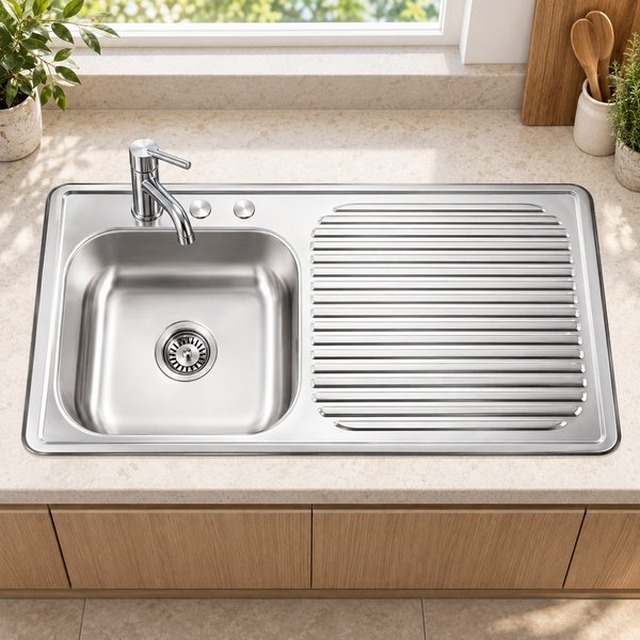
A machine-pressed sink starts as a flat sheet of stainless steel that is stamped into a mold under high pressure. This produces a uniform shape and allows fast, cost-effective production — which is why pressed sinks are widely used for budget-friendly models that still deliver basic functionality. JOMOLA’s pressed range follows this logic. The JOMOLA Pressed Stainless Steel Sink 304 Topmount 1000x500mm (KTS10050) is built from 304 stainless steel with a 6″ depth, 0.6 mm thickness, and a satin and polish finish, and ships with a drainer, soap dispenser, basket, and strainer.
A handmade sink is individually welded and shaped by craftsmen rather than stamped from a single mold. Every line, angle, and edge is created with intention, giving handmade sinks a level of detail that mass-produced pressed sinks cannot match. Because the process is more labor-intensive, handmade sinks sit at a higher price point and are typically chosen when buyers want thicker material, modern design, workstation functions, or custom sizes.
What the Differences Mean for Importers
The most visible difference is appearance, but the practical differences matter more for sourcing decisions. Pressed sinks have large radius corners, which significantly reduce the usable space inside the basin. Handmade sinks use tight radius corners that allow flat surfaces throughout the basin — extra usable space is one of the most notable benefits of the handmade format. For end users who care about fitting large pots and trays, this is a real selling point.
The trade-off is complexity. Pressed sinks offer uniform shape and faster, more cost-effective production, but they tend to have fewer design options. For basic wholesale models, stable quality and consistent packing are often more important than complicated customization — a point that favors pressed sinks for high-volume, standard programs. Handmade sinks, by contrast, support the design-led and workstation formats that are gaining ground in the market.
Market context supports carrying both. The global kitchen sink market was valued at USD 3.8 billion in 2025 and is projected to reach USD 4.1 billion in 2026, expanding at roughly 6.2% CAGR to 2035, with residential replacement as the largest volume base and multifunctional workstation formats broadening value per installation. Top kitchen and bath trends for 2026 include oversized workstations and sinks, warm metallic finishes, and customizable design features. The luxury plumbing fixtures market is also forecast to grow at 4.5% CAGR between 2026 and 2036, with China forecast to grow at 6.1% on upscale residential and hospitality construction. In short: pressed sinks serve the volume base, handmade sinks capture the upgrade and specification business.
Which Type Should Importers Choose?
Importers should choose according to market position. If your customers mainly ask for low-cost standard sinks, pressed sinks may be enough. If your customers want thicker material, modern design, workstation functions, or custom sizes, handmade sinks are the better fit. A practical approach is a two-tier range: pressed sinks as the entry and volume tier, handmade sinks as the premium and project tier. This mirrors how the category is evolving — the U.S. kitchen-and-bath industry is projected to reach about $228 billion in 2026, with repair-and-remodel spending expected to grow 2.9%, and remodeling demand continues to provide stability for retailers tied to replacement and home upgrades.
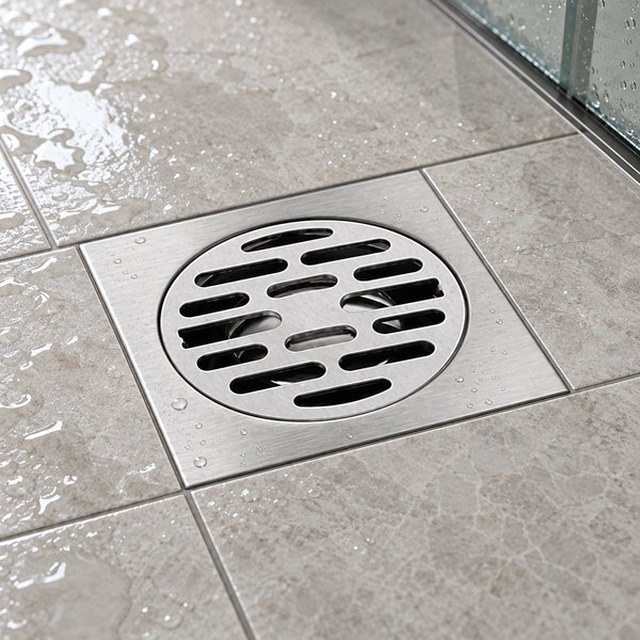
When evaluating a manufacturing partner for either type, look beyond the sink itself. A reliable OEM partner should also cover the fittings that complete the installation. JOMOLA’s catalogue includes stainless steel floor drains in 90×90 mm, 100×100 mm, and 120×120 mm sizes, in SUS 304 and SUS 201 options with satin and polished finishes — useful for importers building a coordinated kitchen and bathroom fixture program rather than sourcing sinks alone.
Recent Company News
JOMOLA publishes buying guidance for trade buyers on its blog, including a 304 stainless steel grade guide for kitchen sinks, a guide to choosing a reliable kitchen and bathroom fixtures OEM manufacturer, an undermount versus drop-in sink comparison, a stainless steel kitchen sink buying guide for wholesalers, and a commercial bathroom fixture maintenance guide for B2B buyers. These resources are aimed at wholesalers, importers, distributors, and project buyers.
Conclusion
Handmade and machine-pressed sinks are not competitors so much as complements. Pressed sinks deliver uniform shape, fast production, and cost efficiency for standard wholesale programs. Handmade sinks deliver tight corners, more usable basin space, design detail, and customization for buyers targeting premium and project customers. Importers who map each format to a clear customer segment — and pair sinks with matching drains and fixtures from a single OEM partner — are best positioned to capture both the volume base and the upgrade market.
About JOMOLA
JOMOLA is a Chinese OEM/ODM manufacturer of kitchen sinks, kitchen faucets, bathroom sinks, bathroom faucets, shower faucets, and floor drains. Its product catalogue includes pressed stainless steel sinks such as the KTS10050 topmount, and stainless steel floor drains including the YYD-312, YYD-2358, YYD-9-12, YYD-030, and YYD-1356 models in SUS 304 and SUS 201 with satin and polished finishes.
Sources
- https://www.jiabosus.com/blogs/resources/handmade-vs-pressed-stainless-steel-kitchen-sinks
- https://allorausa.com/blogs/news/handmade-sinks-understanding-your-options
- http://www.best-sink.com/NewsDetail/22.html
- https://www.fossahome.com/blogs/blog/the-art-of-kitchen-elegance-why-a-handmade-sink-is-the-ultimate-upgrade
- https://www.futuremarketinsights.com/reports/luxury-plumbing-fixtures-market
- https://thehardwareconnection.com/bathroom-remodeling-drives-demand
- https://benderplumbing.com/blog/top-kitchen-bath-trends-for-2026-whats-new-whats-evolving-and-what-to-expect
- https://www.gminsights.com/industry-analysis/kitchen-sinks-market