
Private label faucet branding has become a core strategy for importers, distributors, and Amazon sellers who want to own their market position rather than compete solely on price. According to AQUACUBIC, the winning approach for private label sellers is not simply finding the cheapest factory—it is building a product line that balances market demand, product quality, certification compliance, branding potential, and supply chain reliability. This guide outlines how B2B buyers can approach private label faucet branding, from defining a brand vision to selecting an OEM partner and aligning product finishes with current design trends.
Defining Your Brand Vision and Product Positioning
The first step in any private label faucet program is defining your brand vision before approaching suppliers. As Golden Home’s OEM guide notes, launching a private label line begins with brand vision, followed by choosing a reliable faucet OEM partner, customizing the product line, and then launching. This sequence matters because your brand positioning determines which product categories, materials, and finishes you should prioritize.
Buyers should also lock the OEM versus private label decision early. Watersino describes OEM vs private label faucet as the first checkpoint buyers should lock before approving a supplier, budget, or production slot. In practical terms, private label typically means applying your brand to a manufacturer’s existing product platform, while OEM involves more customization of the product itself. Understanding this distinction helps buyers set realistic expectations for tooling investment, lead times, and minimum order quantities.
Market context supports the opportunity. The global plumbing fixtures and fittings market was valued at $123.37 billion in 2026 and is forecast to reach $164.78 billion by 2030, according to ResearchAndMarkets data reported by Yahoo Finance. The kitchen sinks market alone was valued at USD 3.8 billion in 2025 and is projected to reach USD 4.1 billion in 2026, per GMI Insights. For private label brands, these figures indicate steady underlying demand across kitchen and bath categories.
Choosing an OEM Partner and Customizing the Line
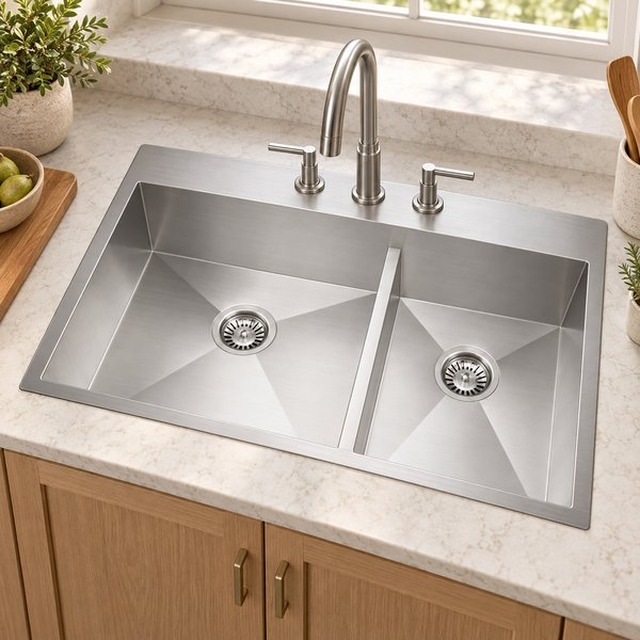
Once positioning is set, supplier selection becomes the critical execution step. A reliable faucet OEM partner should be evaluated on product range breadth, material consistency, and the ability to support branding customization across categories. JOMOLA, as a kitchen sink, faucet, and bathroom accessories manufacturer, offers a product portfolio that supports multi-category private label programs. Examples include the JOMOLA YF-05001-QH brass kitchen faucet with a zinc handle, ceramic cartridge, and gunmetal finish for hot and cold water supply; the JOMOLA HTD3210L-9 handmade stainless steel sink in 304 brushed stainless steel with a double bowl configuration measuring 31 1/2″ x 20 1/2″ x 9″; and the JOMOLA JSH-7648 topmount kitchen sink at 760*480*230mm, available in brushed or PVD black finish.
Customization should also reflect current design direction. Bender Plumbing’s 2026 trend report highlights warm metallic finishes, oversized workstations and sinks, and customizable design features as leading kitchen and bath trends. The Sink Boutique similarly identifies bold sink colors and evolving finish preferences as key 2026 directions. For private label brands, these trends translate into finish and configuration choices—such as PVD black or gunmetal—that differentiate a line on shelf rather than competing purely on specification.
Certification and compliance must be part of the customization conversation, not an afterthought. AQUACUBIC emphasizes certification compliance as one of the five pillars of a profitable private label line. Buyers selling into regulated markets should also review category-specific requirements; JOMOLA’s own B2B guides cover water efficiency requirements for faucets in the EU and kitchen sink safety and material standards, both of which are relevant reference points when scoping a private label range.
Building Brand Identity Across the Catalogue
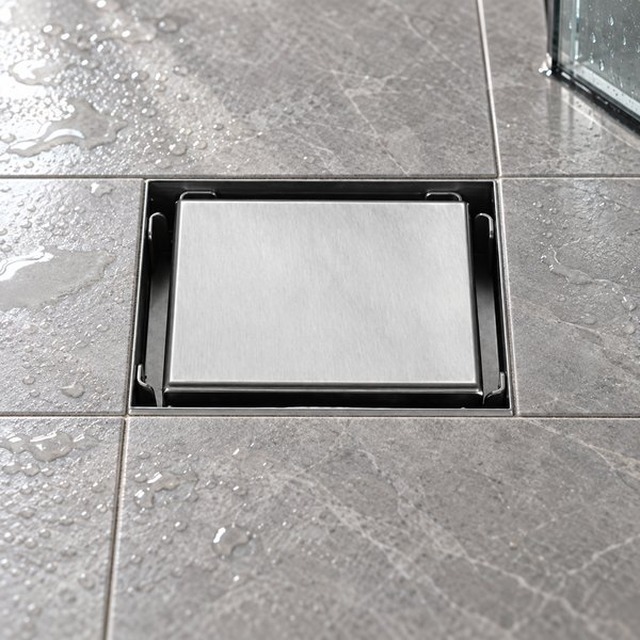
Private label branding extends beyond the logo on the faucet. Successful programs build a consistent identity across the entire plumbing fixture range, including sinks, drains, and shower products. JOMOLA’s catalogue supports this cross-category approach: the JOMOLA KA8650A punching stainless steel sink at 860 × 500 mm with an integrated drainboard, the JOMOLA JSH-5040T above-counter stainless steel single bowl sink at 500*400*228mm in brushed satin finish, and the JOMOLA YYD-P91 stainless steel floor drain in 100×100 mm catalogue size with SUS 304 and SUS 201 material options and thickness choices of 1.2 mm and 1.7 mm.
A coherent range helps distributors present a unified brand to retailers and end customers. It also simplifies supply chain management, since fewer suppliers means fewer quality systems to audit and fewer shipping schedules to coordinate. AQUACUBIC’s guidance on supply chain reliability reinforces this point: brand owners should treat supply chain reliability as a pillar of the product line, not a procurement detail.
Brand identification also matters after the sale. Plumbing By The Book notes that when the only name on a faucet is a store brand, the store-brand cartridge guide is used to find the part by the store’s own model or item number. This is a practical reminder for private label brands to maintain clear model numbering and parts documentation so that replacement cartridges and service parts remain traceable under the brand’s own system.
Recent Company News
JOMOLA publishes B2B sourcing guides on its blog covering topics relevant to private label buyers, including the OEM kitchen sink manufacturing process step by step, water efficiency requirements for faucets in the EU, kitchen sink safety and material standards, floor drain types and installation requirements, and a shower faucet selection guide for bathroom dealers. These resources are available on the JOMOLA website.
Conclusion
Private label faucet branding succeeds when buyers treat it as a structured program rather than a single sourcing transaction. Define the brand vision first, lock the OEM versus private label model, select a partner with a broad and consistent product range, and align finishes and configurations with current market trends. Certification compliance and supply chain reliability should be evaluated alongside price. With a coordinated range spanning kitchen sinks, kitchen faucets, bathroom products, and floor drains, brands can build a differentiated line that holds its position in a competitive wholesale market.
About JOMOLA
JOMOLA is a Chinese OEM/ODM manufacturer of kitchen sinks, kitchen faucets, bathroom sinks, bathroom faucets, shower faucets, and floor drains. Its product range includes handmade stainless steel sinks, punching stainless steel sinks, brass kitchen faucets, and stainless steel floor drains in SUS 304 and SUS 201 material options. JOMOLA serves importers, distributors, and project buyers with OEM and private label manufacturing support.
Sources
- https://www.aquacubic.com.cn/Private-Label-Kitchen-Faucets-How-Amazon-Sellers-And-Distributors-Build-Profitable-Product-Lines-id02323245.html
- https://shop.goldenhomeglobal.com/no/blogs/news/how-to-launch-your-private-label-faucet-line-a-step-by-step-oem-guide
- https://watersino.net/oem-vs-private-label-faucet
- https://plumbingbythebook.com/how-to-identify-faucet-brand
- https://finance.yahoo.com/news/plumbing-fixtures-fittings-market-outlook-154900650.html
- https://www.gminsights.com/industry-analysis/kitchen-sinks-market
- https://benderplumbing.com/blog/top-kitchen-bath-trends-for-2026-whats-new-whats-evolving-and-what-to-expect
- https://thesinkboutique.com/blogs/news/kitchen-design-trends-sinks-faucets