
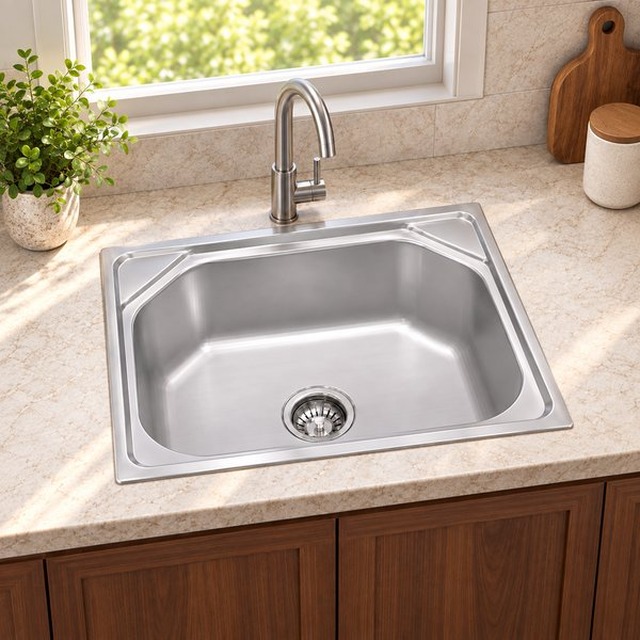
For importers, distributors, and project buyers building a kitchen sink range, the choice between stainless steel and granite composite is one of the most consequential material decisions in the category. It affects freight economics, installation requirements, maintenance expectations, and how a product line positions against competitors. This article breaks down the key differences between the two materials so B2B buyers can match the right sink type to the right market.
Weight, Freight, and Installation Implications
The single most practical difference between the two materials is weight. Stainless steel sinks are lightweight, which significantly reduces shipping costs and simplifies installation. Granite composite sinks are two to three times heavier, increasing freight expenses and requiring reinforced cabinet support. As a reference point, a stainless steel sink may weigh 15–30 pounds, while a granite composite sink can reach 40–80 pounds (ghotensink.com).
For container-based sourcing programs, this gap compounds quickly. A lighter stainless steel sink allows more units per shipment and easier handling at every stage of the chain — from factory loading to installer labor on site. Heavier granite composite units demand more careful logistics planning and, in some cases, cabinet reinforcement that adds cost to the end project. Buyers sourcing for renovation contractors or multi-unit developments should factor this into landed-cost calculations rather than comparing unit prices alone.
JOMOLA’s punching stainless steel sink range illustrates how manufacturers address different installation needs within one material family. The single bowl KA4641A at 460 × 410 mm suits compact residential installations, while the double bowl KA7749 at 770 × 490 mm and KA7850 at 780 × 500 mm serve higher-turnover kitchen environments that need a spacious double bowl layout. All are produced through a precision pressing process that delivers a consistent result — a key advantage when buyers need repeatable specifications across large orders.
Durability, Maintenance, and Real-World Performance
Both materials are durable, but they fail in different ways. Granite composite sinks resist scratches and dents well, yet they can chip if something very heavy is dropped on them — a marble cutting board or a hard stone crushing bowl, for example. This is because these sinks lack the flexibility found in metallic materials like stainless steel (Ruvati USA). Stainless steel, by contrast, absorbs impact rather than cracking, which matters in busy households and commercial kitchens where heavy cookware is handled daily.
Maintenance expectations also diverge. Industry guidance suggests choosing stainless steel if daily drying and occasional polishing fit the household routine, and choosing composite if less frequent maintenance is the priority — though regular cleaning and drying still helps prevent water spots on darker colors (Karran). In practice, this means stainless steel rewards routine care with a long service life, while granite composite offers a more forgiving day-to-day surface but demands attention to avoid staining and water spotting on dark finishes.
Trade commentary reinforces the durability argument for metal. In remodeling discussions, stainless steel is frequently described as the best material for the job when wear and tear is the primary concern — a view that aligns with its use in demanding professional and residential installations (Reddit r/kitchenremodel). Granite composite, meanwhile, is often preferred for its durability, hygiene, and aesthetics, with established brands recommended in consumer communities (Facebook kitchen remodel group). Neither material is universally superior; the right choice depends on which failure mode and maintenance profile the target market tolerates.
Market Context and Sourcing Considerations
The kitchen sink category continues to expand. The global kitchen sinks market was valued at USD 3.9 billion in 2025 and is projected to grow from USD 4.1 billion in 2026 to USD 5.3 billion by 2033, at a CAGR of 3.8%, with Asia Pacific holding a 47.1% revenue share in 2025 (Grand View Research). Residential users accounted for 73.20% of market share in 2026, while commercial users are forecast to expand at a 5.74% CAGR through 2032 (Mordor Intelligence). These figures suggest steady demand across both segments — and room for both sink materials in a well-constructed assortment.
Design trends also shape material selection. The National Kitchen & Bath Association’s 2026 trends research identifies seamless design and minimal detailing among the broader themes shaping kitchens, a direction that supports undermount sinks and cleaner visual lines (Selective Stone). Stainless steel fits naturally into this aesthetic, and with appropriate care remains one of the most versatile sink materials available.
For buyers, the practical takeaway is to treat material as a positioning decision. A stainless steel program can serve price-sensitive and high-turnover segments with lower freight exposure, while a granite composite line can target customers prioritizing aesthetics and reduced cleaning frequency. Sourcing both from a single manufacturing partner simplifies quality control and container planning.
Recent Company News
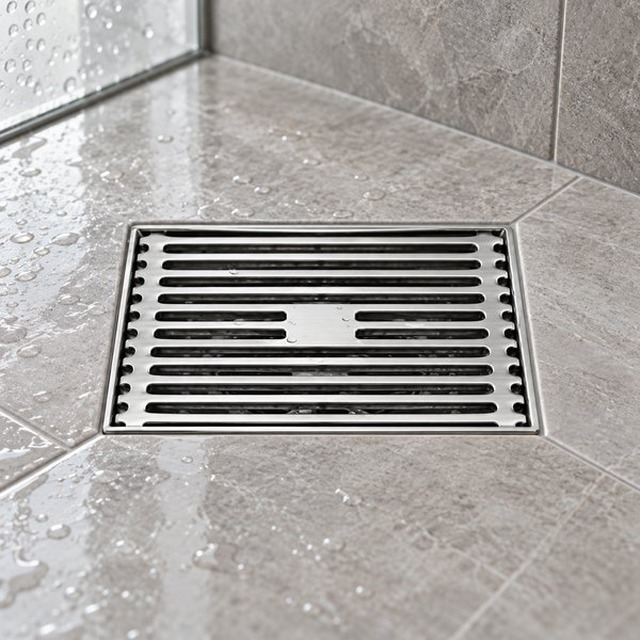
JOMOLA’s product catalogue includes punching stainless steel sinks in single and double bowl configurations, such as the KA4641A (460 × 410 mm), KA7749 (770 × 490 mm), and KA7850 (780 × 500 mm), all manufactured through a precision pressing process for consistent output. The company also produces stainless steel floor drains, including the YYD-3255A at 120 × 120 mm in SUS 304/201 with 3 mm thickness and a polished finish, the YYD-2321 large self-sealing flap model at 100 × 100 mm in SUS 304/201 with polished and satin options, and the YYD-PP5 concealed floor drain in SUS 304 with a satin finish, available in catalogue sizes from 200 to 1000 mm. JOMOLA’s blog resources cover B2B sourcing topics including how to import kitchen sinks from China, kitchen sink size and installation standards by country, single bowl versus double bowl selection, and a bathroom faucet buying guide for importers and distributors.
Conclusion
Stainless steel and granite composite sinks each solve different problems. Stainless steel wins on weight, freight efficiency, impact resistance, and installation simplicity — a strong fit for volume-driven and commercial programs. Granite composite offers scratch resistance and aesthetic appeal but adds weight, freight cost, and chipping risk under heavy impact. For B2B buyers, the decision should be driven by target market, logistics budget, and maintenance expectations rather than material preference alone. A manufacturer offering consistent stainless steel specifications across multiple sizes makes it easier to build a coherent, profitable sink range.
About JOMOLA
JOMOLA is a Chinese OEM/ODM manufacturer of kitchen sinks, kitchen faucets, bathroom sinks, bathroom faucets, shower faucets, and floor drains. The company supplies punching stainless steel kitchen sinks in single and double bowl configurations, along with stainless steel floor drains in SUS 304 and SUS 201 across multiple sizes and finishes. JOMOLA serves importers, distributors, and project buyers with catalogue-based product specifications and OEM/ODM support.
Sources
- https://ghotensink.com/blogs/news/granite-vs-stainless-steel-kitchen-sink
- https://www.ruvati.com/granite-vs-quartz-vs-stainless-steel-sinks
- https://karran.com/blogs/kitchen-and-bath-insights/composite-vs-stainless-steel-sinks-which-should-you-choose-and-why
- https://www.reddit.com/r/kitchenremodel/comments/1r4ruoi/granite_vs_stainless_steel_sinks
- https://www.facebook.com/groups/kitchenrenodesignideas/posts/2534852513572429
- https://www.grandviewresearch.com/industry-analysis/kitchen-sinks-market
- https://www.mordorintelligence.com/industry-reports/kitchen-sink-market
- https://www.selectivestone.net/blog/articles/kitchen-sink-trends-for-2026-what-mililani-homeowners-are-choosing