
Commercial kitchens place relentless demands on sinks, faucets, and drainage systems. For importers, wholesalers, and project buyers specifying fixtures for foodservice clients, understanding maintenance best practices is as important as understanding product specifications. Well-maintained sinks last longer, reduce service calls, and protect the reputation of the brands that supply them. This article outlines practical maintenance guidance that buyers can pass on to their commercial customers and installation partners.
Daily Cleaning Routines That Protect Sink Surfaces
The foundation of any commercial sink maintenance program is a consistent daily routine. Industry cleaning guidance recommends that staff remove food and visible residue after each use, empty strainers and baskets regularly, and wipe down faucets, sink edges, backsplashes, and surrounding surfaces throughout the day. Addressing spills and messes as they occur prevents grease and residue from settling and hardening, which makes deeper cleaning far more difficult.
Strainers deserve particular attention. Best-practice maintenance guidance for commercial kitchen equipment emphasizes using in-sink strainers to prevent drain clogs and wiping down cookware before it reaches the sink or dishwasher. For buyers specifying sinks such as the JOMOLA FHS3321A handmade stainless steel sink — a 33″ x 21″ model with a 10″ deep bowl in 304 stainless steel with a brushed finish — the deep bowl supports heavy daily use, but only if staff keep baskets and strainers clear. Similarly, the JOMOLA undermount workstation kitchen sink (JSH-7846, 750*460*230mm) ships with a strainer with pipe and a large basket, giving foodservice operators the drainage hardware needed to establish a workable daily routine from day one.
Cleaning frequency should follow a tiered schedule. Industry guidance suggests daily tasks such as sanitizing prep surfaces and cleaning utensils, weekly tasks that include flushing drains and disinfecting sinks, and monthly deep cleaning of fixtures. Stainless steel surfaces benefit from periodic polishing as part of monthly maintenance. For brushed and satin finishes — such as those on JOMOLA’s stainless steel sinks and floor drains — gentle, non-abrasive cleaning preserves the surface appearance over years of service.
Chemical handling matters too. Cleaning industry best practices recommend using dilution-control systems for chemicals, since improperly diluted products can be wasteful or ineffective. The correct sequence is to wash first, removing grease, oil, food residue, and soils, allow surfaces to dry, then disinfect with an EPA-registered product and observe the required dwell time. Tools and surfaces should be dry before storage.
Faucets, Drains, and Preventive Maintenance
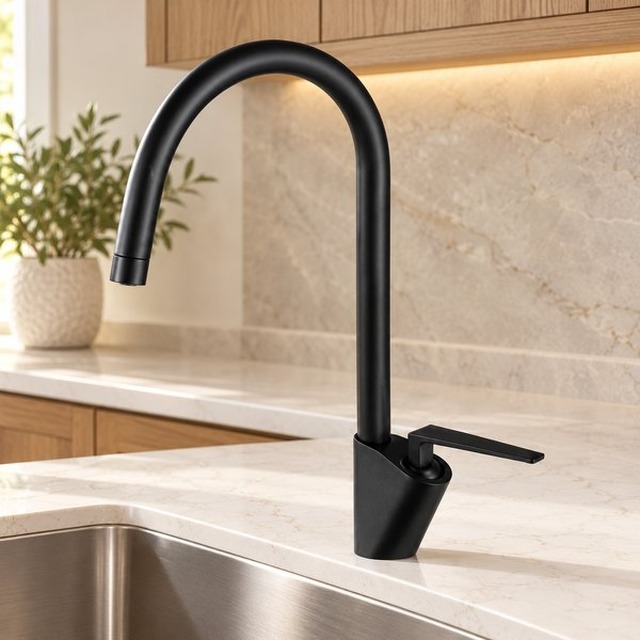
Faucets are the most frequently handled fixture in a commercial sink area, and their internal components determine long-term reliability. The JOMOLA matte black kitchen faucet (YF-05058-BK) pairs a brass body and zinc handle with a ceramic cartridge for hot and cold water control, is built to cUPC Standard, and connects via 3/8″ female compression fittings. Ceramic cartridges are valued in commercial settings because they avoid the wear associated with conventional washers, but routine checks still matter: operators should inspect for leaks at connections, verify handle operation, and address drips promptly before they escalate into service calls.
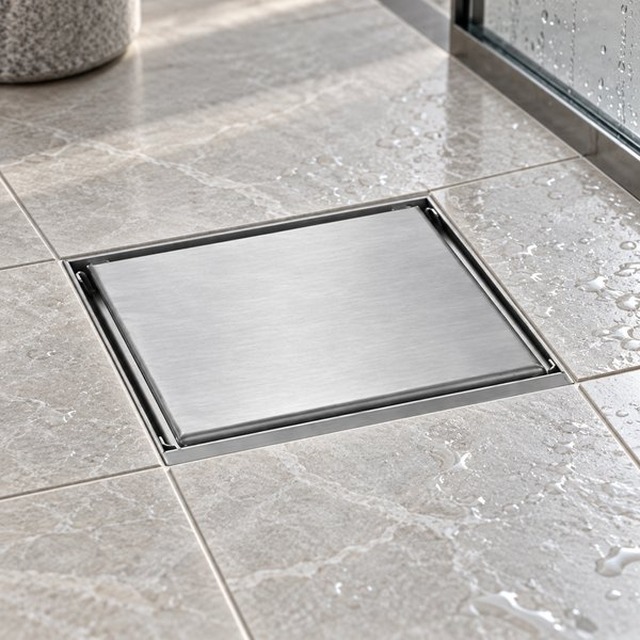
Drainage is where many commercial kitchen problems begin. Grease management guidance is explicit: clean grease traps routinely, pour waste grease into designated containers rather than down the drain, and treat drain maintenance as a preventive routine rather than a reactive repair. Floor drains should be flushed weekly as part of the cleaning schedule. Specifying durable drain covers supports this discipline. JOMOLA’s stainless steel floor drain range includes the YYD-P91-6 in 200×200 mm, available in SUS 304 and SUS 201 with thickness options of 1.2 mm and 1.7 mm; the YYD-P30-15_Solid-Bar in 150×150 mm, manufactured from SUS 304 with a satin finish in 1.2 mm and 1.7 mm thicknesses; and the compact YYD-903 in 100×100 mm with a 9 mm thickness and brushed finish. Matching drain size and material to traffic levels and cleaning regimes helps commercial buyers avoid premature replacement.
A preventive maintenance program ties these elements together. Industry sources note that maintaining a grease management routine helps avoid expensive repairs and extends equipment life, and that scheduled servicing — including checks of seals, gaskets, and calibration — keeps commercial kitchens running reliably. Buyers can add value by supplying customers with a simple checklist covering daily strainer clearing, weekly drain flushing, monthly fixture inspection, and prompt reporting of leaks.
Recent Company News
JOMOLA’s recent blog coverage reflects the priorities of its B2B audience. The article “Fireclay Sink vs Quartz Sink: Choosing the Right Material for Your Kitchen Sink Program” addresses material selection for importers and project buyers building sink ranges. “Kitchen Faucet Market Trends and What Buyers Look For” examines the shift toward more capable, multifunctional faucets alongside stricter compliance expectations. Other recent posts include “Handmade Sink vs Machine-Pressed Sink: Key Differences for Importers” and “Quartz Sink Installation and Maintenance Tips for Retailers,” both aimed at helping channel partners make informed sourcing and after-sales decisions.
Conclusion
Commercial kitchen sink maintenance is a discipline of small, repeated actions: clearing strainers daily, wiping fixtures throughout the day, flushing drains weekly, and inspecting faucets and connections before problems develop. For B2B buyers, the opportunity lies in pairing durable, well-specified products — stainless steel sinks with deep bowls, ceramic-cartridge faucets, and appropriately sized stainless floor drains — with clear maintenance guidance that helps end users protect their investment. Reliable fixtures and informed operators together reduce downtime, service costs, and premature replacement.
About JOMOLA
JOMOLA is a Chinese OEM/ODM manufacturer of kitchen sinks, kitchen faucets, bathroom sinks, bathroom faucets, shower faucets, and floor drains. Its product range includes handmade stainless steel sinks, undermount workstation sinks, brass-body kitchen faucets with ceramic cartridges, and stainless steel floor drains in multiple sizes and material grades. JOMOLA serves importers, wholesalers, and project buyers with original equipment and original design manufacturing.
Sources
- https://enviro-master.com/commercial-cleaning-information/5-steps-when-your-restaurant-has-dirty-sinks
- https://quickservant.com/maintaining-commercial-kitchen-equipment
- https://gocitywide.com/indianapolis/blog/the-1st-guide-to-a-commercial-kitchen-clean-best-practices-benefits-and-professional-solutions
- https://www.issa.com/articles/best-practices-for-commercial-kitchen-cleaning
- https://www.quora.com/How-do-you-keep-your-commercial-kitchen-clean