
A home kitchen typically has one sink. A commercial kitchen usually needs four or five, and each one serves a different function in the workflow. For restaurant operators, canteen managers, and the distributors and wholesalers who supply them, getting the sink specification right is one of the more demanding parts of kitchen design — not because any single fixture is complicated, but because the quantity, variety, and regulatory requirements multiply quickly. This guide covers the key decisions: sink configuration and material, faucet selection, and the drainage details that are easy to overlook until a floor is already poured.
Sink Configuration and Material Selection
The starting point for any commercial kitchen is the dishwashing area. A three-compartment sink is the standard configuration for manual warewashing, and it is not a suggestion — when used properly, three-compartment sinks help restaurants stay up to health code standards, and noncompliance can lead to fines or, at worst, closure. Staff must be trained to follow every step of the three-sink method, including correct water temperatures for washing and sanitizing. Beyond the dish station, most commercial kitchens add a prep sink, a handwash sink, and often a utility or mop sink, which is why the four-or-five-sink count is common.
Material choice is the next decision. Most commercial kitchens use Type 304 stainless steel, which handles typical food-contact conditions well. Type 316 adds molybdenum for better corrosion resistance and suits coastal locations or kitchens exposed to high chloride levels or aggressive cleaning chemicals. Buyers should also note that commercial kitchen sink rules come from a patchwork of sources — the FDA Food Code, local health departments, and state plumbing codes — so requirements vary by location, and following local rules is essential. A qualified restaurant consultant is valuable at this stage.
For fabricators and project buyers, bowl format matters as much as material. JOMOLA’s undermount stainless steel single bowl kitchen sink (787×508×228 mm, brushed satin finish) is designed for modern commercial and residential kitchens, while the punching stainless steel sink (Model KA4641) is produced through a precision pressing process that forms the bowl from stainless steel — a construction method suited to volume production. Undermount bowls simplify countertop cleaning in prep areas; punched bowls offer a cost-effective option for utility stations.
Faucets and Floor Drainage: The Details That Decide Long-Term Cost
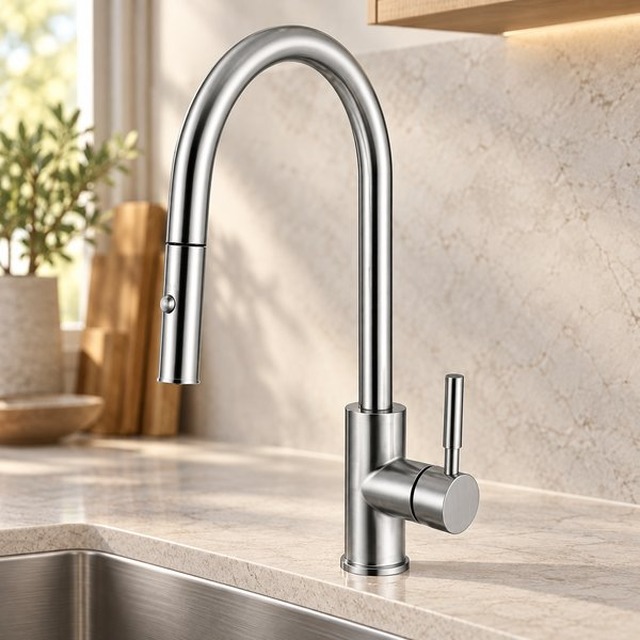
Faucet specification in foodservice is driven by durability and predictable operation rather than styling. Current market reporting on faucet trends notes that the products selling and performing well share a few traits: easy, predictable installation, reliable performance over time, finishes that hold up in real-world use, and availability when needed. Pull-out and pull-down formats are increasingly common because they make filling pots and rinsing sinks easier. JOMOLA’s F502C stainless steel kitchen faucet fits this brief: a satin-finished, SUS 304 pull-out kitchen faucet with a 393.9 mm overall height and 177.2 mm spout height, built for reliable everyday performance in residential and commercial kitchens.
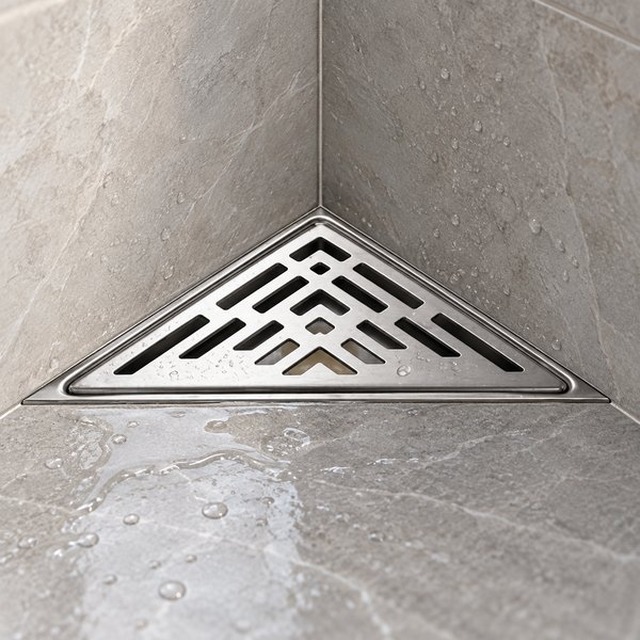
Drainage is where commercial projects most often run into trouble, because floor drains are specified late and installed permanently. Match the drain to the traffic and cleaning regime: a compact 120×120 mm stainless steel drain such as JOMOLA’s YYD-2366, available in SUS 304 or 201 with a choice of finishes and a 2 mm thickness, suits demanding residential and commercial applications. For larger wet areas, the YYD triangular single-use floor drain measures 200×200 mm overall in SUS 304 with a 0.8 mm base thickness. Where budgets are tighter, the YYD-998 square floor drain (94×94 mm, 201 stainless steel, 0.8 mm thickness, polished finish) covers light commercial and residential spaces. All three are catalogued as drain floor products and can be matched to the sink and faucet package in a single order.
Market context supports the investment case: the global kitchen sink market was valued at USD 3.8 billion in 2025 and is projected to reach USD 4.1 billion in 2026, expanding at roughly 6.2% CAGR to 2035, with foodservice expansion and material upgrading broadening the value captured per installation. The plumbing fixtures and fittings market, valued at USD 123.37 billion in 2026, is forecast to reach USD 164.78 billion by 2030.
Recent Company News
JOMOLA publishes buying guidance for the trade on its blog, including “Commercial Kitchen Sink Maintenance Best Practices for B2B Buyers,” which addresses the constant use, grease, food residue, and heavy cookware that commercial sinks endure; “Smart Kitchen Faucet Demand in Europe and the USA: What B2B Buyers Need to Know,” covering how smart faucets are moving from novelty to mainstream specification; and “Kitchen Faucet Market Trends and What Buyers Look For.” The company also supplies stainless steel gold basins on an OEM basis.
Conclusion
A well-specified commercial kitchen pairs the right number of sinks with the right material grade, adds faucets chosen for installation predictability and finish durability, and finishes with floor drains sized to the wet area. Confirm local code requirements early, standardize on SUS 304 where food contact and cleaning chemicals demand it, and buy sinks, faucets, and drainage as one package to simplify procurement and spares. For canteens and restaurant chains rolling out multiple sites, that standardization is what keeps maintenance predictable.
About JOMOLA
JOMOLA is a Chinese OEM/ODM manufacturer of kitchen sinks, kitchen faucets, bathroom sinks, bathroom faucets, shower faucets, and floor drains. Its catalogue includes handmade and punching stainless steel sinks, SUS 304 and 201 floor drains in multiple sizes and finishes, and pull-out kitchen faucets — supplied to importers, wholesalers, and project buyers.
Sources
- https://www.misedesigns.com/commercial-kitchen-sink-guidelines
- https://www.youtube.com/watch?v=1IlRh642WrU
- https://www.ckfco.com/feeds/blog/sink-requirements-commercial-kitchen
- https://www.webstaurantstore.com/article/620/three-compartment-sink-rules.html
- https://www.facebook.com/GoFoodservice/posts/a-home-kitchen-has-one-sink-a-commercial-kitchen-usually-needs-four-or-five-and-/1748817760584661/
- https://wholesalesupply.us/news/faucet-trends-for-2026-whats-selling-in-kitchens-and-bathrooms-right-now
- https://www.gminsights.com/industry-analysis/kitchen-sinks-market
- https://finance.yahoo.com/news/plumbing-fixtures-fittings-market-outlook-154900650.html