
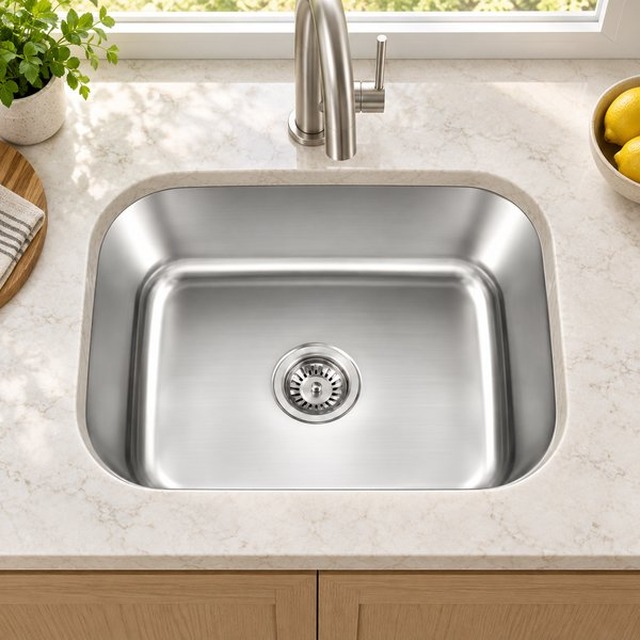
For importers, wholesalers, and project buyers building a kitchen sink range, material selection is one of the most consequential decisions in the sourcing process. Fireclay and quartz composite are two materials that frequently come up in buyer conversations, and each carries distinct performance characteristics, aesthetic associations, and maintenance requirements. This article compares the two on the factors that matter most to B2B buyers — durability, design fit, upkeep, and program positioning — so you can specify with confidence.
Understanding Fireclay and Quartz Composite
Fireclay sinks are produced by firing clay and glaze at extremely high temperatures, fusing the two into a hard, durable finish with good resistance to scratching and staining, as noted in a kitchen sink material guide from Simply Sinks USA. The same source describes fireclay as strong and stain-resistant, easy to clean, and closely associated with the timeless farmhouse design — making it a natural fit for traditional and farmhouse kitchens. Fireclay is also described by Sinkology as an ultra-durable material well suited to pots and pans, named for its ability to withstand incredibly high heat, and commonly seen in the popular farmhouse sink style.
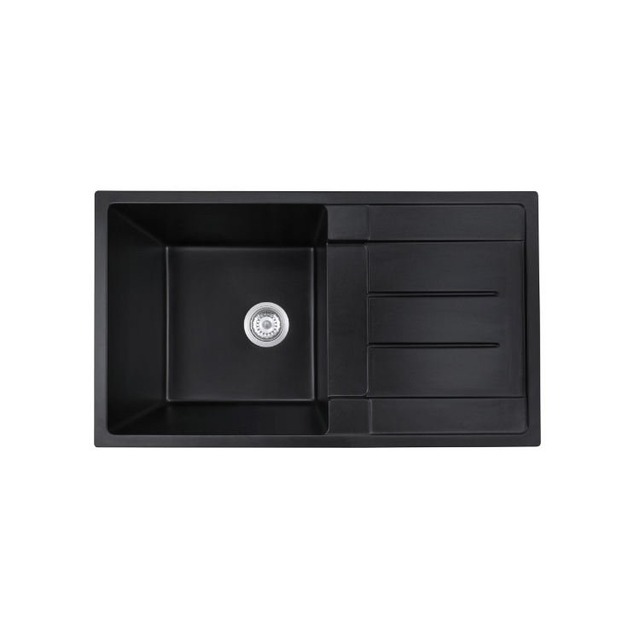
Quartz composite sinks — also referred to as granite composite — are described by Simply Sinks USA as durable with excellent heat resistance, low maintenance, and a contemporary appearance suited to modern kitchen renovations. JOMOLA’s own JSB-8650GT quartz kitchen sink illustrates the format: a topmount granite composite sink measuring 860*500*220mm with a generous single-bowl workspace, built for demanding residential and commercial kitchens.
In short, the two materials serve different design languages. Fireclay leans traditional and farmhouse; quartz composite leans modern and contemporary. For a buyer assembling a balanced catalog, they are complementary rather than competing specifications.
Performance, Maintenance, and Buyer Considerations
On the performance side, both materials offer meaningful advantages. Fireclay’s high-temperature firing produces a hard finish with good scratch and stain resistance, and the material handles heat well. Simply Sinks USA notes that fireclay carries a higher purchase price as a consideration, while its timeless appearance is a clear advantage. The same source positions quartz composite as low maintenance with excellent heat resistance — a practical selling point for busy households and commercial settings.
Maintenance guidance matters for retailers, because after-sales support affects margin and brand reputation. JOMOLA’s blog has addressed this directly in “Quartz Sink Installation and Maintenance Tips for Retailers,” which notes that quartz sinks and quartz countertops have become a staple of modern kitchen design and that retailers need practical guidance to pass on to customers and installation partners. Fireclay, by contrast, benefits from simple care — a kitchen sink material guide recommends mild soap to keep the surface looking new.
One point worth flagging for buyers: material debates in the trade often extend beyond fireclay versus quartz. In a Houzz discussion on farmhouse sinks, one contributor argued that the only materials really worth considering are solid surface, well-made copper, or brushed stainless steel. That perspective is a useful reminder that fireclay and quartz are not the only options — and that stainless steel remains a dominant force in the category. JOMOLA’s range reflects this reality, with pressed and handmade 304 stainless steel sinks such as the KUS2318 undermount single bowl (23″ x 17 3/4″, 1.2 mm thickness, available in 7″, 8″, or 9″ bowl depths) and the FHS3321A handmade sink with a 31″ x 16″ single bowl and 10″ bowl depth.
Matching Material to Market Demand
Market data supports a diversified sink program. According to GM Insights, the global kitchen sink market was valued at USD 3.8 billion in 2025 and is projected to reach USD 4.1 billion in 2026 and USD 7 billion by 2035, expanding at approximately 6.2% CAGR from 2026 to 2035. The same source notes that residential replacement activity remains the largest volume base, while material upgrading and multifunctional workstation formats broaden the value captured per installation. Mordor Intelligence reports that residential users held 73.20% of the kitchen sink market share in 2026, with commercial users forecast to expand at a 5.74% CAGR through 2032.
These figures suggest buyers should stock both materials rather than choosing one. Fireclay serves the farmhouse and traditional segment; quartz composite serves modern renovations and low-maintenance commercial projects. A third pillar — stainless steel — covers value and professional segments. JOMOLA’s catalog supports this three-way approach, including the KTS2522 topmount pressed stainless steel sink (25″ x 22″, UPC certified, bowl depths of 6″/7″/8″) and the JDH-9045 handmade sink at 900*450*230mm with a cup rinser and accessories.
For faucet pairing, JOMOLA’s YF-05001-CP kitchen faucet combines a brass body with a zinc handle and ceramic cartridge, chrome-finished and supporting hot and cold water — a specification that suits both fireclay and quartz installations. Faucet trends also reward buyers who stay current: Wholesale Supply Group notes that manufacturers have simplified installation with pre-assembled components and faster-connect supply lines, and advises sticking with brands that have proven track records, since cheap touchless units can quickly become service calls that eat into margins.
Recent Company News
JOMOLA’s blog has recently published guidance for B2B buyers on several relevant topics, including “Kitchen Faucet Market Trends and What Buyers Look For,” “Quartz Sink Installation and Maintenance Tips for Retailers,” “Handmade Sink vs Machine-Pressed Sink: Key Differences for Importers,” and “304 Stainless Steel Grade Guide for Kitchen Sinks Explained.” These articles reflect the company’s ongoing focus on helping importers, wholesalers, and project buyers make informed specification decisions.
Conclusion
Fireclay and quartz composite each earn a place in a well-built sink program. Fireclay delivers a timeless farmhouse aesthetic with strong stain resistance and heat tolerance, at a higher purchase price. Quartz composite offers durability, excellent heat resistance, low maintenance, and a contemporary look suited to modern renovations. Rather than treating them as either/or, buyers should map each material to the design segments and end users they serve — and keep stainless steel in the mix for value and professional applications. JOMOLA’s range across quartz, pressed stainless steel, and handmade stainless steel sinks gives buyers a practical foundation for that strategy.
About JOMOLA
JOMOLA is a Chinese OEM/ODM manufacturer of kitchen sinks, kitchen faucets, bathroom sinks, bathroom faucets, shower faucets, and floor drains. Its product range includes pressed stainless steel sinks, handmade stainless steel sinks, and quartz kitchen sinks, alongside kitchen faucets such as the YF-05001-CP. JOMOLA serves importers, wholesalers, and project buyers with OEM and ODM capabilities.
Sources
- https://simplysinksusa.com/best-kitchen-sink-material
- https://www.houzz.com/discussions/5963077/quartz-or-fireclay-a-better-option-for-farmhouse-sink
- https://www.youtube.com/watch?v=thbJLHdkP40
- https://www.sinkology.com/planning/top-5-kitchen-sink-materials
- https://wholesalesupply.us/news/faucet-trends-for-2026-whats-selling-in-kitchens-and-bathrooms-right-now
- https://gminsights.com/industry-analysis/kitchen-sinks-market
- https://www.mordorintelligence.com/industry-reports/kitchen-sink-market