
Floor drains are one of those product categories that buyers often treat as an afterthought — until a project fails inspection or a customer reports standing water in a shower or utility room. For importers, distributors, and project buyers, understanding floor drain types and their installation requirements is essential to sourcing products that perform in the field and reduce returns.
Floor Drain Types and Where They Are Used
Floor drains are not a single product. According to Plumbing & Mechanical’s guide to residential floor drain selection, the first decision in any specification is the application itself — whether the drain serves a shower, an area drain, or a general-purpose wet space. The main categories include linear drains, center-point drains, and general-purpose drains, each suited to different layouts and flow requirements.
Installation context also shapes the choice. Drains set into a slab-on-grade application — common in bathrooms, utility rooms, and garages — differ from those installed above a waterproofed assembly. MIFAB’s typical installation literature describes a floor drain with a surface membrane clamp, designed for installations where a watertight seal is required at the top level of the grate. In this design, an adjustable strainer with a two-piece beveled top clamps the waterproofing material securely to the drain body to ensure a watertight joint. Buyers sourcing for tiled shower applications should confirm whether a clamping collar is part of the drain assembly, since this detail determines compatibility with the waterproofing system.
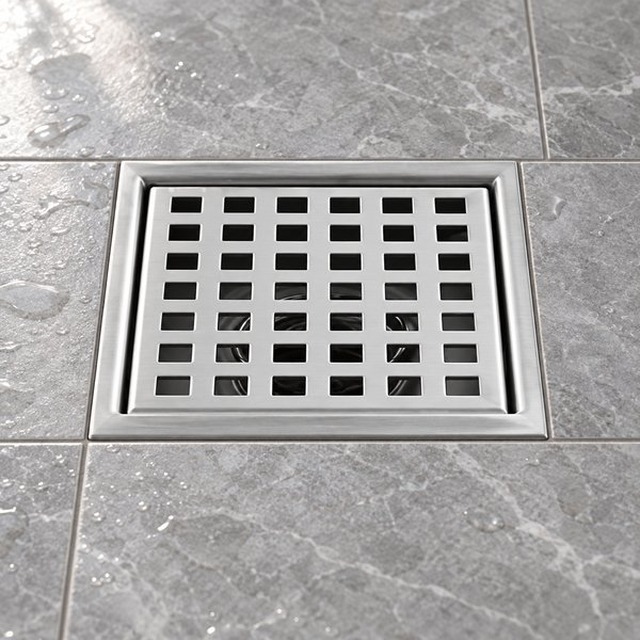
Material and finish matter as much as configuration. JOMOLA’s floor drain range illustrates the options available to OEM and ODM buyers. The YYD-P911 square-grid floor drain is built from SUS 304 / 201 stainless steel with a satin finish and a 110×110 mm catalogue size, engineered for reliable drainage in residential and commercial wet areas. The YYD-2317B offers a 100×100 mm overall size in 201 stainless steel with 2 mm thickness and a brushed finish. Both formats give distributors a choice between grid styles and finishes to match different project specifications.
Installation Requirements Buyers Should Verify
Specification drainage guidance from Zurn emphasizes that pipe size and grate open area should be among the first specifications decided, because they directly determine whether the drain meets the required flow rate and drainage system capacity. Beyond flow, the type of connection — inside caulk, threaded, or no-hub — is a critical selection criterion that must match the piping system on site.
A second requirement is trapping. Floor drains are installed with a P-trap and connected to the building’s drainage system, a standard detail noted in civil engineering installation references. The trap prevents sewer gas from entering the occupied space, and its presence affects the rough-in depth and the drain body height. MIFAB’s installation documentation also notes that basic floor drain configurations may include features such as a trap primer tapping or an internal sediment bucket, both of which influence maintenance intervals and specification choices.
For buyers, the practical takeaway is that a floor drain cannot be sourced in isolation. The grate open area, connection type, trap configuration, and — where waterproofing is involved — the clamping method must all align with the project’s plumbing design. Requesting these details from suppliers before quoting prevents costly mismatches at installation.
Coordinating Drains with the Wider Fixture Package
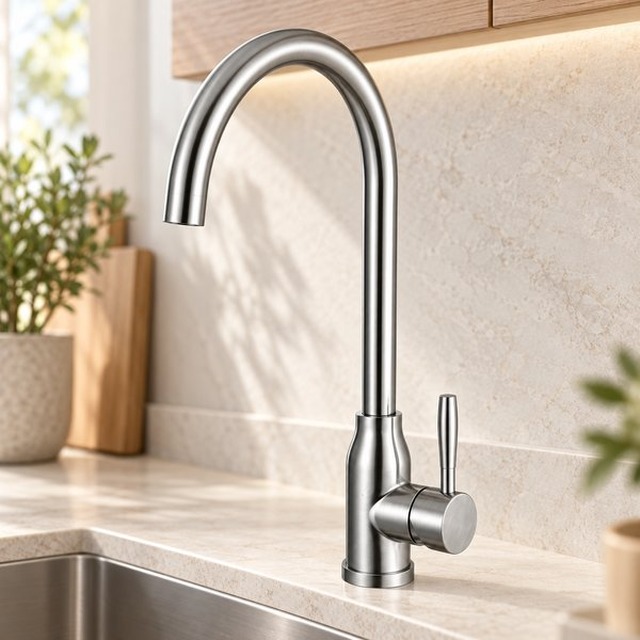
Floor drains rarely ship alone. Distributors building a complete wet-area package typically pair them with sinks and faucets from the same supplier to simplify logistics and quality control. JOMOLA’s catalogue supports this approach: the KA5050 punching stainless steel sink offers a 500×500 mm single-bowl footprint, while the KA7549 punching sink measures 750×490 mm with an integrated drainboard. For premium residential projects, the HUS3018 handmade stainless steel sink is a 30″ × 18″ × 10″ undermount model in 304 stainless steel with a brushed finish, 1.0–1.5 mm thickness, and a 28″ × 16″ bowl. On the faucet side, the F106 is a SUS 304 stainless steel pull-out kitchen faucet with a satin finish, designed for durability in residential and commercial kitchens.
Market context supports continued demand for these categories. NKBA projects the U.S. kitchen and bath industry will reach approximately $228 billion in 2026, with repair-and-remodel spending expected to grow 2.9 percent even as new construction spending declines. The global kitchen sink market was valued at USD 3.8 billion in 2025 and is projected to reach USD 4.1 billion in 2026, according to GM Insights. For buyers, the replacement and remodel segment — not new construction — is where floor drain and fixture volume is likely to remain steadiest.
Recent Company News
JOMOLA has published recent B2B sourcing resources for trade buyers, including a shower faucet selection guide for bathroom dealers, a guide to importing kitchen sinks from China, a comparison of stainless steel versus granite sinks, and a reference on kitchen sink size and installation standards by country. These articles are available on the company’s website and are aimed at importers, distributors, and project buyers.
Conclusion
Floor drain sourcing rewards buyers who ask specification questions early. Confirm the application type, grate open area, connection method, trap arrangement, and — for tiled installations — whether a membrane clamp is required. Then match those requirements against a supplier’s actual product range, such as JOMOLA’s SUS 304 / 201 stainless steel floor drains in 110×110 mm and 100×100 mm formats. Combined with sinks and faucets from the same source, this approach reduces installation risk and simplifies the supply chain for distributors serving remodel-driven demand.
About JOMOLA
JOMOLA is a Chinese OEM/ODM manufacturer of kitchen sinks, kitchen faucets, bathroom sinks, bathroom faucets, shower faucets, floor drains, and bathroom accessories. The company supplies stainless steel floor drains, punching and handmade stainless steel sinks, and stainless steel faucets to importers, distributors, and project buyers worldwide.
Sources
- https://www.pmmag.com/articles/105037-a-plumbers-guide-to-residential-floor-drain-selection-and-installation
- https://mifab.com/Catalog/Library/f-typical-installations.pdf
- https://www.zurn.com/content/dam/zurnv49/resources/technical-resources/floor-drains/floor-drains-engineering-guide.pdf
- https://www.facebook.com/civilengineeringqs/posts/different-types-of-floor-drains-for-different-purposes/1394139712721141
- https://nkba.org/research/2026-kitchen-bath-industry-outlook
- https://www.gminsights.com/industry-analysis/kitchen-sinks-market