
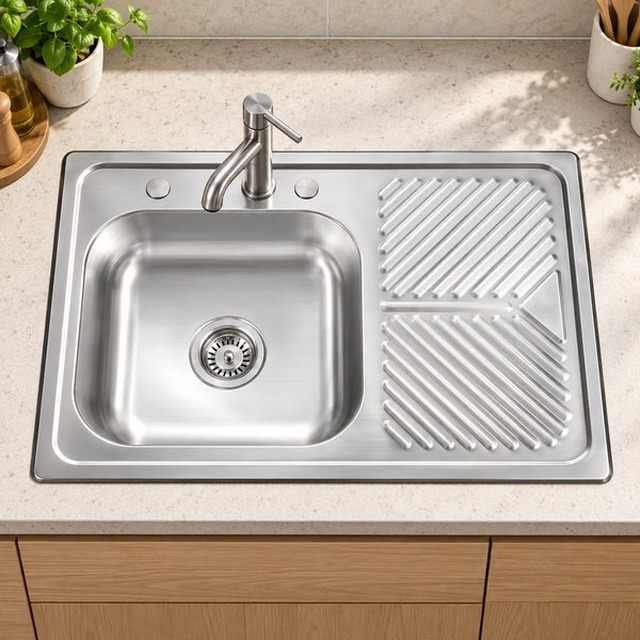
For importers, distributors, wholesalers, and project buyers, kitchen sinks remain a cornerstone category. The global kitchen sink market was valued at USD 3.8 billion in 2025 and is projected to reach USD 4.1 billion in 2026, expanding at approximately 6.2% CAGR through 2035, according to GMInsights. Residential replacement activity remains the largest volume base, while foodservice expansion and material upgrading broaden the value captured per installation. China sits at the center of this supply: Chinese factories account for roughly 56% of global stainless steel sink unit volume, supported by deep supplier clusters, mature tooling, and export infrastructure.
This guide walks B2B buyers through the practical decisions involved in importing kitchen sinks from China — from factory vetting and material specification to sampling, payment terms, and inspection.
Step 1: Define Your Product and Vet the Factory
Sourcing stainless steel kitchenware from China is a process of selecting a qualified factory, agreeing on material grade and tolerances, placing an order above a minimum quantity, and verifying compliance before shipment. A complete sourcing run moves through seven decisions: vetting the factory, confirming MOQ, checking certifications, planning lead time, agreeing payment and inspection terms, and finalizing logistics.
Start by defining the sink format your market actually wants. The choice between single bowl and double bowl is one of the most consequential sourcing decisions in the kitchen sink category, and it shifts by retail channel and region. Sink dimensions, counter heights, and installation methods also vary meaningfully from country to country, so a specification that sells well in one market may sit unsold in another.
Next, verify the factory itself. Background checks prevent costly mistakes, and a manufacturer’s product catalogue is the fastest way to judge its real capabilities. A supplier that offers pressed, handmade, and composite sinks — plus coordinated faucets and drains — can support a broader programme than a single-line workshop.
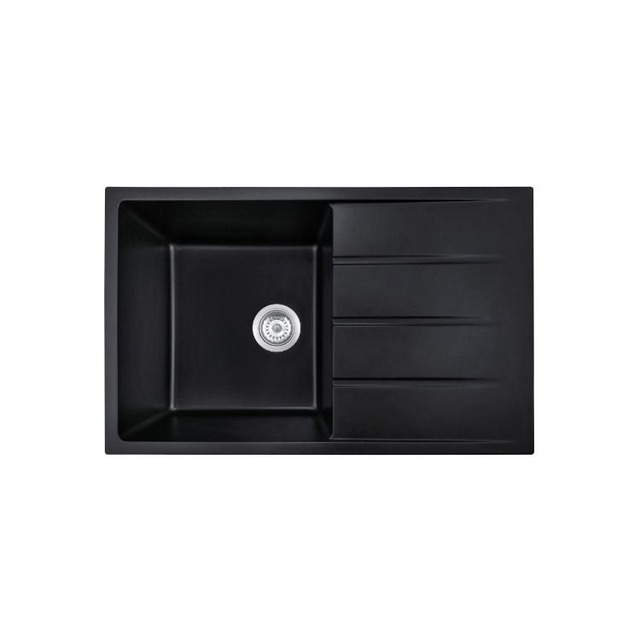
JOMOLA’s range illustrates the spread a buyer can expect. The JOMOLA KTS8052 is a pressed stainless steel sink in 304 stainless steel with a 0.6 mm thickness and an 800 x 520 mm footprint — a topmount single bowl with a 6″ bowl depth and satin/polish finish. For double-bowl demand, the JOMOLA KA11550 punching stainless steel sink measures 1150 × 500 mm in catalogue size, giving users two distinct washing areas. Buyers wanting a premium undermount option can look at the JOMOLA JDH-8456D handmade stainless steel sink, an undermount double bowl unit at 82*46*24cm with brushed satin or black surface treatment. And for the growing composite segment, the JOMOLA JSB-8050GT quartz kitchen sink is a topmount granite composite sink measuring 800*500*220mm, available in Black and Athens Granite finishes.
Step 2: Samples, Terms, Payment, and Inspection
Never commit to a production order without physical samples. Request samples and negotiate terms before signing anything — this is where material grade, edge finish, bowl depth, and packaging quality get confirmed in your hand rather than on a spec sheet.
Payment structure matters just as much. Understand payment methods and terms and protect your money with the right structure, typically a deposit against a balance settled on inspection or shipment. Agree the inspection terms in writing before production begins, and plan lead time against your own sell-through calendar rather than the factory’s convenience.
Material grade deserves particular attention because it drives both price and after-sales risk. SUS 304 is the standard for kitchen and bath applications; SUS 201 appears in lower-cost drainage products. JOMOLA’s YYD-P11-30 stainless steel floor drain, for example, is built from SUS 304 with a 3 mm thickness and a satin finish, while the YYD-324 large self-sealing flap floor drain measures 100×100 mm and is available in SUS 304 or SUS 201, with a choice of 2 mm or 3 mm thickness. Knowing which grade you are buying — and specifying it in the PO — prevents disputes later.
Finally, consider the full accessory programme. Faucets sit at the intersection of design and function, and the bathroom faucet category is a steady revenue driver for importers and distributors — but it is also one where sourcing mistakes are costly. Consolidating sinks, faucets, and drains with one qualified manufacturer reduces supplier management overhead and improves finish consistency across a project.
Recent Company News
JOMOLA publishes ongoing B2B sourcing guidance for importers and distributors through its blog, including “Kitchen Sink Size and Installation Standards by Country: A B2B Sourcing Guide,” “Bathroom Faucet Buying Guide for Importers and Distributors,” “Single Bowl vs Double Bowl Sink: Which Fits Your Retail Market,” “Commercial Sink Guide for Restaurants and Canteens: What B2B Buyers Need to Know,” and “Smart Kitchen Faucet Demand in Europe and the USA: What B2B Buyers Need to Know.”
Conclusion
Importing kitchen sinks from China rewards preparation. Define the format and dimensions your market needs, vet the factory behind the catalogue, confirm material grade and tolerances, sample before committing, and lock down payment and inspection terms in writing. Buyers who follow those seven decisions consistently — and who consolidate sinks, faucets, and drainage with a manufacturer that produces all three — are best positioned to capture the residential replacement and foodservice demand driving the category through 2035.
About JOMOLA
JOMOLA is a Chinese OEM/ODM manufacturer of kitchen sinks, kitchen faucets, bathroom sinks, bathroom faucets, shower faucets, and floor drains. Its product range includes pressed/punching stainless steel sinks, handmade stainless steel sinks, quartz granite composite sinks, and SUS 304 stainless steel floor drains, serving importers, distributors, wholesalers, and project buyers.
Sources
- https://www.gminsights.com/industry-analysis/kitchen-sinks-market
- https://m.samsink.com/blog/How-to-Import-Commercial-Stainless-Steel-Sinks-from-China-Complete-2026-Guide_b29732
- https://ufamcooks.com/the-b2b-buyers-guide-to-sourcing-stainless-steel-kitchenware-from-china
- https://chinesecheck.com/blog/how-to-import-from-china
- https://equip-chef.com/how-to-import-commercial-kitchen-equipment-from-china-manufacturers
- https://www.jomola.net/kitchen-sink-size-and-installation-standards-by-country-a-b2b-sourcing-guide/
- https://www.jomola.net/bathroom-faucet-buying-guide-for-importers-and-distributors/
- https://www.jomola.net/single-bowl-vs-double-bowl-sink-which-fits-your-retail-market/