
For importers, distributors, and project buyers, kitchen sink specifications are rarely a one-size-fits-all decision. Sink dimensions, counter heights, and installation methods shift meaningfully from market to market, and getting these details wrong can mean costly returns, failed inspections, or cabinets that simply do not fit. This guide breaks down the key size and installation conventions by region, and explains how OEM/ODM manufacturers like JOMOLA approach the category.
Regional Size and Counter Height Conventions
In North America, the standard kitchen counter height sits at 36 inches (91.4 cm / 914 mm), a figure derived from a 34.5-inch base cabinet plus roughly 1.5 inches of countertop. In practice, installed counter heights commonly range from 34 to 36 inches (86.4–91.4 cm), depending on the cabinet line and the end user’s height. Metric kitchens, such as those in the UK, typically run slightly lower, at approximately 33.5–35.4 inches (85–90 cm / 850–900 mm), reflecting standard UK worktop dimensions.
Sink footprints follow similar regional logic. The most common kitchen sink size for modern kitchens ranges from 30 to 33 inches wide with a depth of 8 to 10 inches, a range that fits most standard base cabinets. Standard kitchen sink dimensions generally fall between 30 and 33 inches wide and 18 to 22 inches front-to-back, with 8 to 10 inches of depth. Compact kitchens may use 24-inch sinks, while large, open kitchens can accommodate 36-inch or even 42-inch models. Single-bowl sinks often follow a standard measurement set of roughly 22 x 24 x 8 inches (width x length x depth), while double-bowl sinks require additional width.
For buyers sourcing for multiple markets, this variation argues for a product range rather than a single SKU. JOMOLA’s handmade stainless steel sink JSH-6845, for example, measures 680 × 450 × 230 mm in a topmount configuration with a brushed/PVD black finish — a footprint suited to compact and mid-size cabinetry. The AB7546D-A-P-3 kitchen sink, at 750 × 460 × 220 mm, adds adjustable water angle and a press-operated cup washer, features that appeal to buyers targeting multifunctional kitchen formats.
Installation Methods and Accessibility Requirements
Installation standards also diverge by market and application. Topmount sinks remain common in replacement and retrofit projects because they sit on top of the countertop and require a simpler cutout. Undermount installations, by contrast, demand more precise fabrication and are often specified in higher-end residential and commercial projects.
Accessibility is a critical variable, particularly in North American multifamily and commercial work. ADA-accessible kitchen sinks use the same width categories as standard sinks, but the critical difference is basin depth. Standard kitchen sinks are typically 9–10 inches deep, while ADA-compatible sinks are significantly shallower — commonly around 5.5 inches for undermount installations — to preserve the knee clearance required below the counter. Buyers serving healthcare, hospitality, or public-sector projects should confirm depth requirements before finalizing a purchase order.
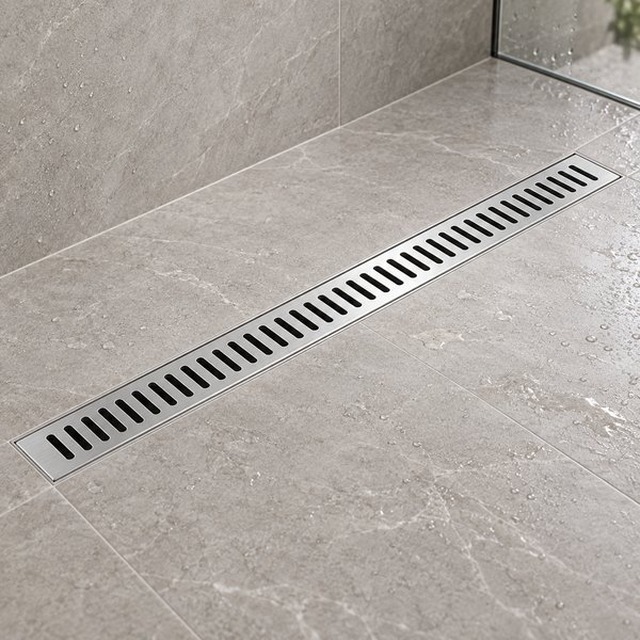
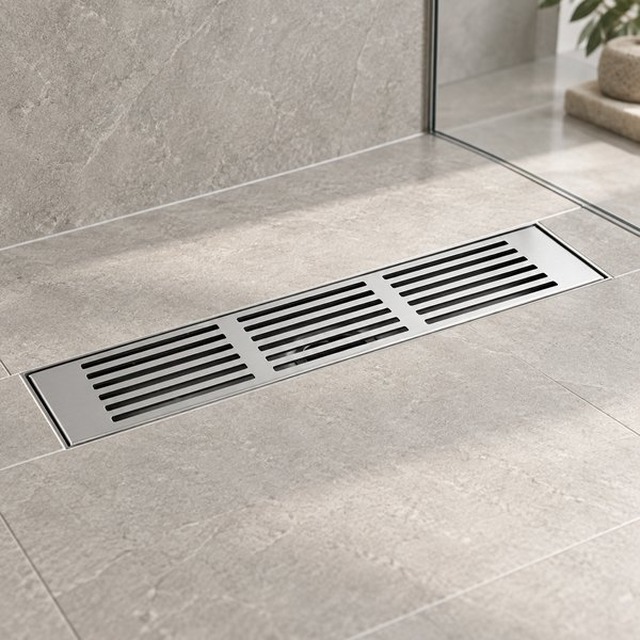
Drainage and fixture planning round out the installation picture. Deep sinks take up more under-counter space, which can interfere with storage and prove difficult for shorter users — a practical consideration when specifying for varied user groups. Complementary drainage products, such as JOMOLA’s linear floor drain YYD-P9-B in SUS 304 stainless steel with a 1 mm thickness and satin finish, and the YYD-P5_Striped floor drain available in SUS 304 or SUS 201 with a 1.2 mm thickness and overall sizes from 200 mm to 1000 mm, allow buyers to coordinate wet-area drainage with sink and faucet packages.
Faucet selection must also match the sink and counter plan. JOMOLA’s F501 SUS 304 stainless steel kitchen faucet has an overall height of 407.1 mm, a spout height of 193.2 mm, and a spout reach of 213.5 mm — dimensions that buyers should check against backsplash clearance and sink bowl placement. For bathroom and secondary installations, the BHTS2115 handmade stainless steel sink measures 21″ × 15″ × 7 5/8″ overall with an 18″ × 12″ bowl and a 6 1/2″ bowl depth, built in 304 stainless steel with a brushed finish.
Market Context for 2026 Buyers
Several macro trends support continued investment in the kitchen and bath category. Industry forecasts from the National Kitchen & Bath Association (NKBA) project the U.S. kitchen-and-bath industry will reach about $228 billion in 2026, with repair-and-remodel spending expected to grow 2.9 percent. The global kitchen sink market was valued at USD 3.8 billion in 2025 and is projected to reach USD 4.1 billion in 2026 and USD 7 billion by 2035, expanding at approximately 6.2% CAGR from 2026 to 2035, with residential replacement activity remaining the largest volume base.
Design trends are also shaping specification choices. The top kitchen and bath trends for 2026 include warm metallic finishes, oversized workstations and sinks, spa-inspired showers, sustainability-focused materials, and customizable design features. Mixed metals and coordinated finishes are gaining ground, with designers intentionally pairing complementary metals across sinks, faucets, and hardware. Multifunctional faucets that integrate filtration or cup washing are increasingly relevant as kitchens become more compact and more functional.
Recent Company News
JOMOLA’s recent blog coverage reflects these buyer priorities. The company has published a bathroom faucet buying guide for importers and distributors, a comparison of single-bowl versus double-bowl sinks for retail markets, a commercial sink guide for restaurants and canteens, and an analysis of smart kitchen faucet demand in Europe and the USA. These resources are aimed at wholesalers, importers, distributors, and project buyers navigating specification and sourcing decisions.
Conclusion
Kitchen sink size and installation standards are not universal. Counter heights, sink footprints, basin depths, and mounting methods vary by country and application, and accessibility requirements add another layer of complexity for multifamily and commercial projects. For B2B buyers, the practical takeaway is to source from manufacturers who can supply a range of dimensions and finishes, document specifications clearly, and support OEM/ODM customization. JOMOLA’s product line — spanning handmade stainless steel sinks, kitchen faucets, and floor drains in SUS 304 and SUS 201 — is structured to serve that kind of multi-market demand.
About JOMOLA
JOMOLA is a Chinese OEM/ODM manufacturer of kitchen sinks, kitchen faucets, bathroom sinks, bathroom faucets, shower faucets, and floor drains. The company serves importers, distributors, wholesalers, and project buyers, offering products such as the JSH-6845 handmade stainless steel sink, the AB7546D-A-P-3 kitchen sink, the F501 SUS 304 stainless steel kitchen faucet, and the YYD-P9-B and YYD-P5 floor drains.
Sources
- https://sanikb.com/blogs/resource/standard-kitchen-sink-sizes-dimension-reference
- https://allorausa.com/blogs/commercial/kitchen-sink-standard-sizes
- https://www.kingstonbrass.com/blogs/blog/standard-kitchen-sink-sizes
- https://georgecabinetry.com/blog/a-complete-guide-to-choose-the-right-kitchen-sink-dimensions
- https://www.ruvati.com/how-to-choose-the-right-kitchen-sink-size
- https://thehardwareconnection.com/bathroom-remodeling-drives-demand
- https://www.gminsights.com/industry-analysis/kitchen-sinks-market
- https://benderplumbing.com/blog/top-kitchen-bath-trends-for-2026-whats-new-whats-evolving-and-what-to-expect
- https://thesinkboutique.com/blogs/news/kitchen-design-trends-sinks-faucets
- https://www.aquacubic.com/kitchen-faucet-trends-2026-b2b-sourcing-guide