
For importers, wholesalers, and project buyers building a kitchen sink range, the single bowl versus double bowl decision is one of the most consequential specification choices you will make. It affects which customer segments you can serve, how your range is merchandised, and how well your catalogue matches the way end users actually cook and clean. The good news is that both layouts have clear, defensible market positions — the key is matching each configuration to the right buyer profile rather than treating one as universally superior.
The Case for Single Bowl: Space, Capacity, and Modern Aesthetics
Single bowl sinks win on capacity and simplicity. Industry guidance is consistent on this point: a single bowl is usually the better fit when the priority is space, large cookware, dishwasher-heavy households, frequent cooking, and simple cleanup. A wide single basin comfortably accommodates oversized woks and pressure cookers, which is why large single-bowl designs remain a favorite in modern kitchen planning. Single basins also fit compact layouts better, and they deliver a clean, minimalist look that pairs well with contemporary design — a meaningful merchandising advantage as kitchen aesthetics continue to shift.
From a retail economics standpoint, single bowl models can also be the more accessible price point. Trade reporting has noted that a double-bowl model from a given brand can carry a higher list price than the equivalent single-bowl version, and installation generally costs more for the more complex configuration. For buyers serving value-conscious segments, first-time renovators, or compact apartment projects, that positioning matters.
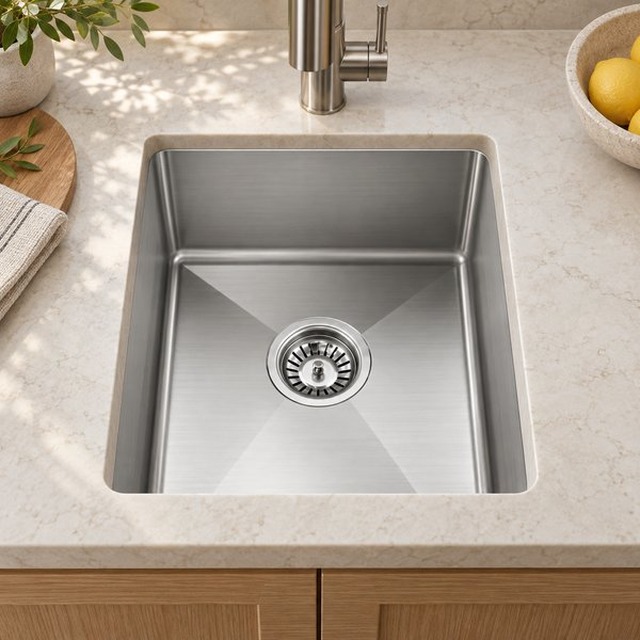
JOMOLA’s own range reflects this demand. The **HUS1318-9** handmade stainless steel sink is a single bowl unit in 304 stainless steel with a brushed finish, measuring 13″ × 18″ × 9″ overall with an 11″ × 16″ bowl and 9″ bowl depth, built with 1.0–1.5 mm thickness and undercoating. For volume-oriented programmes, the **KA6045C** punching stainless steel sink is a single bowl kitchen sink built for professional and residential applications. Together they give buyers a handmade tier and a pressed tier to cover different price bands within the single-bowl category.
The Case for Double Bowl: Separation, Workflow, and Traditional Appeal
Double bowl sinks sell on separation. Two basins support hand-washing, soaking, rinsing, and food preparation, and they let multiple people work at the sink at once — a genuine workflow benefit in busy households. Double bowl options also carry a more traditional aesthetic with practical division of space, which keeps them relevant for replacement buyers and traditional kitchen schemes.
The trade-offs are real and should be stated plainly in your product literature. Double bowl sinks consume more cabinet real estate and require additional plumbing in the sink cabinet, so they suit larger kitchens and planned renovations better than tight retrofits. Drain placement and plumbing layout also influence which configuration performs best in a given installation. For buyers, this is an opportunity: double bowl models appeal to replacement and remodel customers who already have the cabinet space and plumbing in place, while single bowl models capture new-build and compact-project demand.
Building a Range That Covers Both Buyers
The most useful framing for a retail range is priority-based. Choose single bowl when the customer’s priority is space; choose double bowl when the priority is separation. Neither layout is always better for resale — a single bowl often appeals to buyers who want a modern, open kitchen sink, while double bowl retains its traditional following. That means a balanced catalogue, rather than a bet on one layout, is the safer commercial position.
Market context supports this. The global kitchen sink market was valued at USD 3.8 billion in 2025 and is projected to reach USD 4.1 billion in 2026 and USD 7 billion by 2035, expanding at approximately 6.2% CAGR from 2026 to 2035, with residential replacement activity remaining the largest volume base. The UK kitchen sinks market is estimated to witness a CAGR of 4.3% from 2026 to 2033, with growing interest in multiple bowls and multifunctional designs. In the broader fixtures category, the Kitchen & Sink Fixtures & Fittings segment is readjusted to a revised 5.1% CAGR over the forecast period, and the U.S. kitchen-and-bath industry is projected by the NKBA to reach about $228 billion in 2026, with repair-and-remodel spending expected to grow 2.9 percent. For buyers, the implication is straightforward: replacement-driven demand rewards a range that stocks both layouts in credible finishes and price tiers.
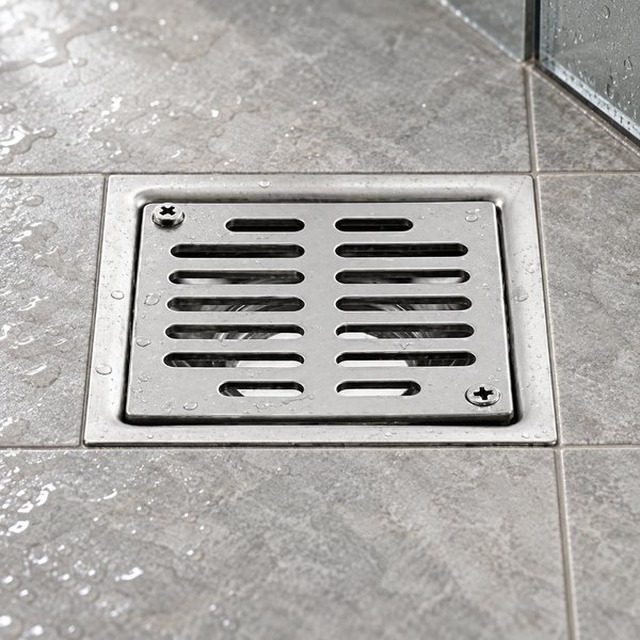
Finish coordination is the other lever. Mixed metals and coordinated finishes are among the strongest kitchen design trends for 2026, with designers intentionally pairing complementary metals across sinks, faucets, and hardware. A single-bowl sink in brushed stainless steel paired with a contrasting faucet finish is an easy way to merchandise this trend. JOMOLA’s **YF-05001-QH** brass kitchen faucet, with a zinc handle, ceramic cartridge, hot and cold water supply, and gunmetal finish, is a natural pairing for modern single-bowl displays. For commercial and foodservice buyers, drainage specification completes the package — the **YYD-990T** 100×100 mm SUS 304 floor drain with 2 mm thickness and satin finish, and the **YYD-3255A** 120×120 mm drain in SUS 304/201 with 3 mm thickness and polished finish, are designed for reliable performance in residential and commercial settings.
Recent Company News
JOMOLA’s recent blog coverage addresses the specification questions buyers raise most often. “Commercial Sink Guide for Restaurants and Canteens: Specifying Sinks, Faucets and Drainage for Foodservice Projects” notes that a home kitchen typically has one sink while a commercial kitchen usually needs four or five, each serving a different function in the workflow. “Smart Kitchen Faucet Demand in Europe and the USA: What B2B Buyers Need to Know” examines how smart kitchen faucets are moving from novelty to mainstream specification in two of the world’s most demanding kitchen markets. “Commercial Kitchen Sink Maintenance Best Practices for B2B Buyers” covers the demands of constant use, grease, food residue, and heavy cookware. “Fireclay Sink vs Quartz Sink: Choosing the Right Material for Your Range” frames material selection as one of the most consequential decisions for importers and project buyers. “Kitchen Faucet Market Trends and What Buyers Look For” reports that the global faucet market is expected to grow by $12.35 billion during 2022–2026, accelerating at a CAGR of 8.5%, driven by changing consumer preferences, rising luxury home construction, and growing building activity.
Conclusion
Single bowl and double bowl sinks are not competing answers to the same question — they answer different ones. Single bowl serves capacity, compact layouts, modern aesthetics, and value positioning. Double bowl serves separation, multitasking, traditional taste, and replacement buyers with existing plumbing. For retail market fit, the winning strategy is a range that stocks both, merchandised by customer priority and finish trend, backed by consistent drainage and faucet pairings. Buyers who map configuration to buyer profile rather than picking a favourite will capture both the new-build and replacement sides of a growing market.
About JOMOLA
JOMOLA is a Chinese OEM/ODM manufacturer of kitchen sinks, kitchen faucets, bathroom sinks, bathroom faucets, shower faucets, and floor drains. The company’s catalogue includes handmade and punching stainless steel sinks, brass kitchen faucets, and SUS 304 stainless steel floor drains in multiple sizes and finishes, serving residential and commercial applications.
Sources
- https://cavalieriflooring.com/pages/blog/single-bowl-vs-double-bowl-kitchen-sink
- https://www.creategoodsinks.com/blogs/create-good-sinks-tips-information-and-reviews/single-bowl-vs-double-bowl-kitchen-sinks-finding-your-perfect-match
- https://nozloo.com/blogs/guides/single-vs-double-bowl-farmhouse-sink
- https://www.remodelista.com/posts/single-bowl-vs-double-bowl-kitchen-sinks-which-is-better-remodeling-101
- https://www.ruvati.com/single-sink-vs-double-sink
- https://www.simpolo.com/blog/kitchen-sink-designs-modern-homes
- https://www.gminsights.com/industry-analysis/kitchen-sinks-market
- https://www.grandviewresearch.com/industry-analysis/kitchen-sinks-market
- https://www.businesswire.com/news/home/20220426006049/en/Global-Plumbing-Fittings-and-Fixtures-Industry-to-2026—New-Constructions-Offer-Significant-Opportunities—ResearchAndMarkets.com
- https://thehardwareconnection.com/bathroom-remodeling-drives-demand
- https://thesinkboutique.com/blogs/news/kitchen-design-trends-sinks-faucets