
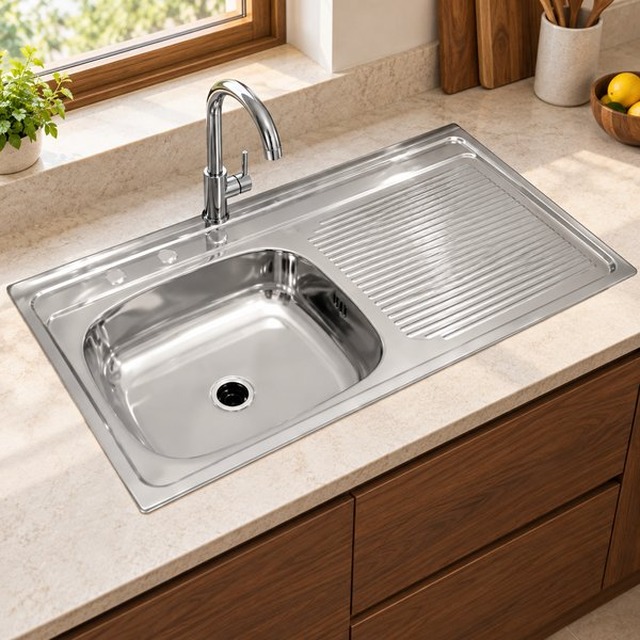
For wholesalers, importers, distributors, and project buyers, the kitchen sink category remains a cornerstone of the business. Within that category, one of the most consequential sourcing decisions is also one of the simplest on paper: single bowl or double bowl? The answer is not universal. It depends on the retail segment you serve, the living spaces your buyers furnish, and the workflow priorities of end users. This article breaks down the trade-offs so you can stock the right mix.
The Case for Single Bowl Sinks
Single bowl sinks maximize usable basin space and simplify cleaning, which is why they continue to perform well in compact layouts and modern kitchen designs. A wide single basin comfortably accommodates oversized woks and pressure cookers — a practical advantage that has kept large single-bowl designs a favorite in modern homes. Industry trend coverage for 2026 highlights oversized workstations and sinks as a leading direction, alongside warm metallic finishes and customizable design features.
JOMOLA’s catalogue reflects this demand. The **HTSM3320 handmade stainless steel sink** is a single bowl model crafted from 304 stainless steel with a brushed finish, measuring 33″ x 20″ x 10″ (839 × 509 × 254 mm) overall, with a bowl of 30″ x 15 7/8″ (763 × 403 mm) and steel thickness ranging from 1.0–1.5 mm. For buyers serving value-oriented or project channels, the **KA10050E punching stainless steel sink** offers a 1000 × 500 mm catalogue size with an integrated drainboard, combining the strength of a pressed stainless steel sink with practical drainage. And for the premium end of the market, the **AB11746D-A-U-1 workstation kitchen sink** — a 1170 × 460 × 220 mm catalogue-size unit supplied with a catalogue accessory configuration — speaks directly to the workstation trend.
Retail positioning matters here. A single bowl often appeals to buyers who want a modern, open kitchen sink, and neither layout is inherently better for resale. For retailers targeting urban apartments, compact kitchens, or design-led renovation customers, single bowl is frequently the stronger shelf presence.
The Case for Double Bowl Sinks
Double bowl sinks separate food prep from dishwashing to improve workflow, and they need more space but offer more functionality for multitasking. A double bowl can dedicate one side to scraps and rinsing while keeping the other clear — a benefit that resonates with family households and buyers who cook frequently. Drain placement, cabinet space, and plumbing all influence which layout suits a given installation, so double bowl specifications should be matched carefully to the cabinet dimensions your retail customers typically work with.
JOMOLA’s **HTD3322BL-9 handmade stainless steel sink** addresses this segment: a double bowl handmade kitchen sink built from 304 stainless steel with a brushed finish, bringing professional-grade craftsmanship to residential and commercial kitchens. For distributors whose buyers include both homeowners and light commercial accounts, a double bowl option rounds out the assortment and captures shoppers who prioritize separation of tasks over maximum basin width.
The practical sourcing takeaway: single bowl drives modern, space-conscious retail; double bowl serves functionality-driven, multi-tasking households. Carrying both — and letting your sales floor or catalogue copy explain the workflow difference — reduces the risk of losing a sale over layout preference.
Matching Layout to Market Segment
Beyond bowl count, buyers should consider the broader category signals. The global kitchen sink market was valued at USD 3.8 billion in 2025 and is projected to reach USD 4.1 billion in 2026, expanding at approximately 6.2% CAGR from 2026 to 2035, with residential replacement activity remaining the largest volume base while multifunctional workstation formats broaden value per installation. Meanwhile, the U.S. kitchen-and-bath industry is projected to reach about $228 billion in 2026, with repair-and-remodel spending expected to grow 2.9 percent — a reminder that replacement and upgrade cycles, not just new construction, drive sink demand.
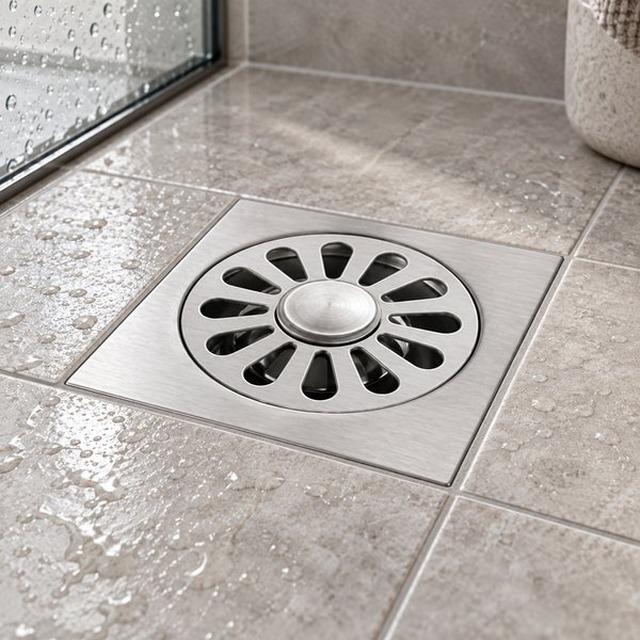
For B2B buyers, that means assortment planning should account for both replacement shoppers (who often replace like-for-like) and upgrade shoppers (who may switch layouts for design or workflow reasons). Finish consistency is also part of the equation: 2026 trend coverage points to finishes and faucet profiles that feel more intentional, with one main finish repeated across faucet and key details for a cleaner look. Sinks and faucets are increasingly specified together, so pairing your bowl-layout decision with a coordinated faucet and accessory offer strengthens the retail story. JOMOLA’s range extends beyond sinks to kitchen faucets, bathroom sinks, bathroom faucets, shower faucets, and floor drains — including the **YYD-2314** and **YYD-1355** stainless steel floor drains in 100×100 mm catalogue size, available in SUS 304/201 with 2 mm or 3 mm thickness options — allowing buyers to consolidate categories with one manufacturing partner.
Recent Company News
JOMOLA publishes ongoing B2B guidance for the trade, including a commercial sink guide for restaurants and canteens, a look at smart kitchen faucet demand in Europe and the USA, commercial kitchen sink maintenance best practices, and a comparison of fireclay versus quartz sinks for buyers. These resources are available on the company’s blog and are aimed at wholesalers, importers, distributors, and project buyers.
Conclusion
There is no single correct answer to the single versus double bowl question — only the right answer for your market. Single bowl wins on capacity, cleaning simplicity, and modern appeal; double bowl wins on workflow separation and multitasking. Smart assortment planning carries both, aligns them with the segments you serve, and supports the choice with coordinated faucets and accessories. As a Chinese OEM/ODM manufacturer, JOMOLA can help buyers build that assortment across kitchen sinks, kitchen faucets, bathroom sinks, bathroom faucets, shower faucets, and floor drains.
About JOMOLA
JOMOLA is a Chinese OEM/ODM manufacturer of kitchen sinks, kitchen faucets, bathroom sinks, bathroom faucets, shower faucets, and floor drains. The company’s catalogue includes punching sinks, handmade sinks, workstation sinks, and stainless steel floor drains in SUS 304/201 material options, serving wholesalers, importers, distributors, and project buyers.
Sources
- https://nozloo.com/blogs/guides/single-vs-double-bowl-farmhouse-sink
- https://www.ruvati.com/single-sink-vs-double-sink
- https://www.simpolo.com/blog/kitchen-sink-designs-modern-homes
- https://benderplumbing.com/blog/top-kitchen-bath-trends-for-2026-whats-new-whats-evolving-and-what-to-expect
- https://www.gminsights.com/industry-analysis/kitchen-sinks-market
- https://thehardwareconnection.com/bathroom-remodeling-drives-demand
- https://daxib.com/blogs/news/2026-kitchen-and-bathroom-trends-you-can-shop-at-dax