
For importers, distributors, and project buyers building a kitchen sink range, the choice between stainless steel and granite is one of the first specification decisions that shapes the rest of the catalogue. Both materials sell, but they serve different buyers, different installation environments, and different maintenance expectations. This article breaks down the practical differences so you can position each option correctly in your market.
Material Construction and Durability
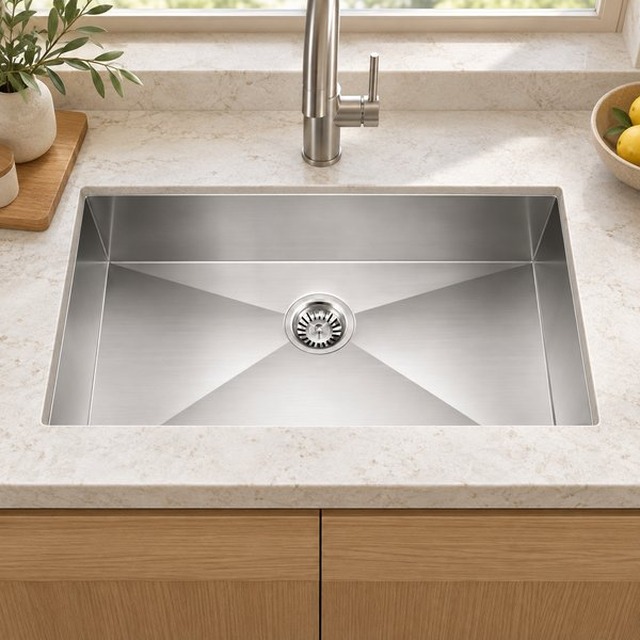
Stainless steel sinks are formed from metal, and the grade matters. JOMOLA’s HUS2718 handmade stainless steel sink, for example, is built from 304 stainless steel with a brushed finish and a single bowl measuring 25″ × 16″ within a 27″ × 18″ × 10″ overall size. Handmade construction gives the bowl consistent wall thickness and a clean, professional look that suits both residential and commercial kitchens. Stainless steel resists heat, chips, and cracks, and it does not stain from everyday food preparation.
Granite sinks — often called composite or quartz sinks — are molded from crushed stone mixed with resin. They are heavy, dense, and resistant to scratching and high temperatures. Industry commentary notes that granite sinks are durable and resilient, but they come at a higher price point and demand more upkeep than stainless steel. For buyers, the trade-off is straightforward: granite offers a premium stone look and quiet, solid feel; stainless steel offers proven durability with lower maintenance demands.
Maintenance, Cleaning, and Daily Use
Maintenance is where the two materials diverge most sharply for end users. Cleaning guidance for stainless steel emphasizes wiping or scrubbing in the direction of the grain, and applying a water-repellent barrier product can make ongoing cleaning easier; experts recommend a deep clean at least once a month. Stainless steel tolerates abrasive pads and hot water without discoloration, which is why it dominates commercial kitchens.
Granite composite requires gentler care. Abrasive cleaners can dull the surface, and because the material is molded, chips at edges are harder to repair than a metal surface. Ruvati’s comparison puts it plainly: granite sinks suit buyers with the budget to purchase and maintain them, while stainless steel suits those without the time and resources for extensive upkeep. For distributors, this translates into a clear segmentation message — stainless steel for high-traffic family kitchens and foodservice, granite for design-led residential projects where the buyer accepts a maintenance routine.
Design Trends, Installation, and Market Positioning
Design trends for 2026 favor intentional finishes and coordinated looks. Mixed metals are a strong theme, with designers pairing complementary finishes across sinks, faucets, and hardware rather than matching everything exactly. A brushed stainless steel sink pairs naturally with a satin-finish faucet such as the JOMOLA F901 SUS 304 kitchen faucet, a pull-out model with a 300 mm overall height and satin finish — a combination that reads as cohesive without being overly matched.
Installation format also influences the choice. Undermount configurations remain popular for solid-surface and quartz countertops, and wholesale distributors increasingly stock undermount sinks across stainless steel, granite, and porcelain to serve that demand. Granite composite is often specified for undermount installation because the material can be molded to precise rim profiles; stainless steel works in both undermount and drop-in formats, giving buyers more flexibility across price tiers.
Market context supports carrying both. The global kitchen sinks market is projected at roughly US$4.1 billion in 2026, with sustained residential renovation activity driving replacement demand and material upgrading broadening value per installation. The broader kitchen and bath fixtures market is forecast to grow at a 6.80% CAGR through the analysis window, with water conservation mandates accelerating premium fixture replacement in North American metro areas. For a wholesale range, that means stainless steel as the volume workhorse and granite as the margin-building premium option.
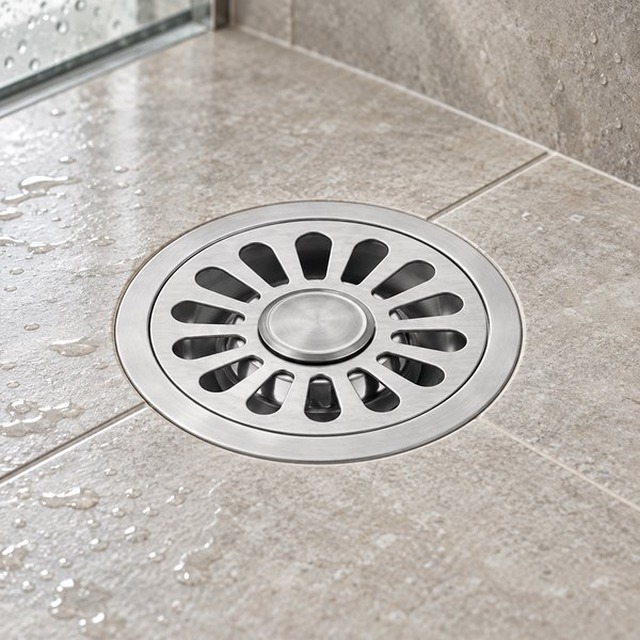
Drainage completes the specification. JOMOLA’s floor drain range includes the YYD-9-15, a 150×150 mm SUS 304 stainless steel drain with a 9 mm thickness and satin finish, alongside 201 stainless steel options in 100×100 mm and 120×120 mm sizes — useful for project buyers specifying wet areas alongside sink packages.
Recent Company News
JOMOLA publishes ongoing B2B sourcing guidance for importers and distributors, including a guide to importing kitchen sinks from China, a country-by-country reference on kitchen sink size and installation standards, a bathroom faucet buying guide, a comparison of single bowl versus double bowl sinks for retail markets, and a commercial sink guide for restaurants and canteens covering sinks, faucets, and drainage for foodservice projects.
Conclusion
Stainless steel and granite sinks are not competitors so much as complements. Stainless steel wins on durability, low maintenance, and commercial suitability; granite wins on premium appearance and design-led residential projects, provided the buyer accepts a higher price and gentler care routine. Stocking both, with clear positioning for each, lets distributors serve volume and margin segments from a single supplier relationship.
About JOMOLA
JOMOLA is a Chinese OEM/ODM manufacturer of kitchen sinks, kitchen faucets, bathroom sinks, bathroom faucets, shower faucets, and floor drains. Its catalogue includes handmade 304 stainless steel sinks, SUS 304 and 201 stainless steel floor drains in multiple sizes, and satin-finish stainless steel kitchen faucets, supplied to importers, wholesalers, and project buyers.
Sources
- https://www.ruvati.com/granite-vs-quartz-vs-stainless-steel-sinks
- https://www.businessinsider.com/expert-shared-tips-for-cleaning-porcelain-stainless-steel-sinks-2022-3
- https://www.mapquest.com/us/minnesota/sink-source-401090966
- https://markwideresearch.com/kitchen-and-bath-fixtures-market
- https://thesinkboutique.com/blogs/news/kitchen-design-trends-sinks-faucets
- https://www.persistencemarketresearch.com/market-research/kitchen-sinks-market.asp
- https://www.gminsights.com/industry-analysis/kitchen-sinks-market