
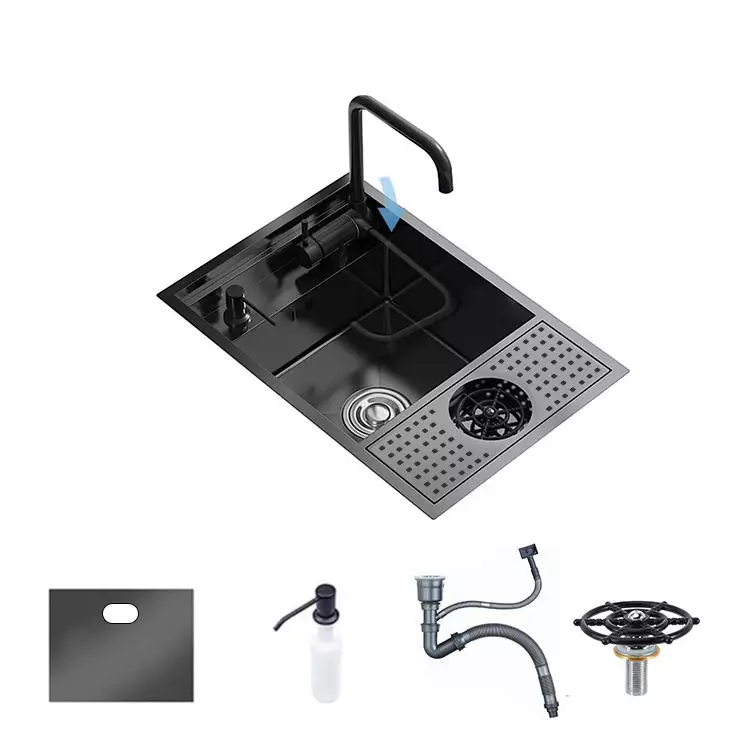
For importers, distributors, and project buyers, the kitchen sink category remains a cornerstone of the business. Within that category, one of the most consequential sourcing decisions is material selection. Stainless steel and granite composite represent two of the most common options on the market, and each carries distinct advantages that affect pricing, durability, maintenance requirements, and end-user satisfaction. Understanding these differences is essential for anyone building a competitive product portfolio.
Material Composition and Durability
Stainless steel sinks are manufactured from metal, with 304 stainless steel being a common grade for kitchen applications. JOMOLA’s HUS3219 handmade stainless steel sink, for example, is crafted from 304 stainless steel with a brushed finish, measuring 32″ × 19″ × 10″ overall with a 30″ × 17″ bowl and a 10″ bowl depth. This handcrafted model features 1.0–1.5 mm thickness. The JSH-3346 undermount single bowl model measures 330*457*228mm (13″*18″*9″) with a brushed satin finish, offering a seamless, premium look.
Granite composite sinks, by contrast, are engineered from a blend of stone particles and resin. According to industry analysis, granite composite resists scratches better than stainless steel, while stainless steel handles heat more effectively. Stainless steel is also described as more budget-friendly, lightweight, and impact-resistant. Granite composite offers quieter operation, better scratch resistance, and a more premium appearance. The better choice depends on kitchen style and daily usage.
For B2B buyers, this durability profile matters. Stainless steel’s impact resistance and heat tolerance make it a practical choice for high-traffic residential and commercial installations. Granite composite’s scratch resistance appeals to consumers prioritizing appearance retention, though it typically commands a higher price point.
Maintenance, Cleaning, and Noise
Maintenance requirements differ meaningfully between the two materials. Industry guidance on stainless steel care emphasizes scrubbing or wiping in the direction of the grain, and recommends deep cleaning bi-weekly or at least once a month. Stainless steel sinks can benefit from products that leave an invisible water-repellent barrier, making ongoing cleaning easier.
Granite composite sinks are generally marketed as requiring less frequent deep cleaning due to their scratch-resistant surface, though they may require specific cleaning products to avoid dulling the finish. One industry source notes that granite sinks are better if you have the budget to buy them and keep them maintained, while stainless steel can be better for people who don’t have the time and resources for regular and extensive maintenance.
Noise is another differentiator. Granite composite sinks are consistently described as quieter during use, while stainless steel can amplify sound without proper insulation. For open-plan kitchens or commercial settings where noise is a concern, this is a meaningful consideration.
Design Flexibility and Market Positioning
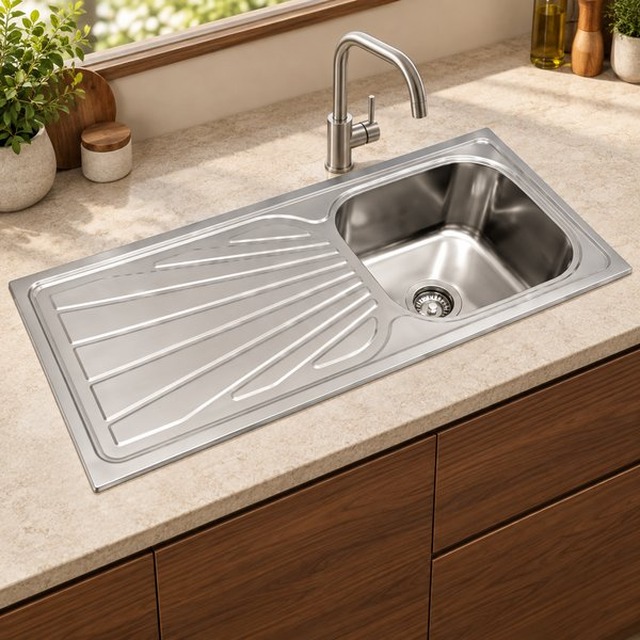
Stainless steel offers broad design flexibility. JOMOLA’s range includes the KA10050N punching stainless steel sink with an integrated drainboard at a catalogue size of 1000 × 500 mm, combining a spacious washing area with a built-in drainboard in one continuous unit. The Handmade Hidden Sink System offers integrated, space-saving details. A Satin Workstation Sink with Drainboard provides a functional stainless steel workstation solution for distributors and project buyers.
These configurations align with current market trends. The global kitchen sink market was valued at USD 3.8 billion in 2025 and is projected to reach USD 4.1 billion in 2026 and USD 7 billion by 2035, expanding at approximately 6.2% CAGR from 2026 to 2035. Residential replacement activity remains the largest volume base, while foodservice expansion, material upgrading, and multifunctional workstation formats broaden the value captured per installation.
Design trends for 2026 include warm metallic finishes, oversized workstations and sinks, and a warmer, softer approach to minimalism. Mixed metals and coordinated finishes are also gaining traction, with designers intentionally pairing complementary metals to create depth and contrast. Stainless steel’s versatility supports these trends, while granite composite typically appeals to buyers seeking an upscale, stone-like aesthetic.
Recent Company News
JOMOLA continues to support B2B sourcing, project supply, and OEM/ODM enquiries across its kitchen sink, faucet, and bathroom accessory categories. The company’s product line includes the F601 stainless steel kitchen faucet, built from SUS 304 stainless steel with a satin finish, designed for demanding residential and commercial kitchen installations. With an overall height of 602.3 mm, a spout height of 205.4 mm, and a spout reach suited to professional use, this pull-out kitchen faucet complements stainless steel sink installations.
JOMOLA also maintains a library of B2B sourcing resources, including guides on importing kitchen sinks from China, kitchen sink size and installation standards by country, bathroom faucet buying for importers and distributors, single bowl vs double bowl sink selection, and commercial sink specification for restaurants and canteens. These resources reflect the company’s focus on supporting buyers through specification, compliance, and logistics decisions.
Conclusion
The choice between stainless steel and granite composite sinks is not a matter of one material being universally superior. Stainless steel offers affordability, impact resistance, heat tolerance, and broad configuration options, making it a versatile choice for volume-driven and commercial applications. Granite composite delivers scratch resistance, quieter operation, and a premium appearance, appealing to buyers targeting upscale residential markets willing to pay more and maintain the surface carefully.
For importers and distributors, the optimal strategy is often to carry both materials to serve different customer segments and price points. JOMOLA’s stainless steel sink range, including handmade, punching, undermount, and workstation models, provides a foundation for buyers seeking reliable, configurable products with OEM/ODM support. Contact JOMOLA for drawings, available finishes, dimensions, MOQ, and packaging options.
About JOMOLA
JOMOLA is a Chinese OEM/ODM manufacturer of kitchen sinks, kitchen faucets, bathroom sinks, bathroom faucets, shower faucets, and floor drains. The company serves B2B clients including importers, distributors, wholesalers, and project buyers, offering product sourcing, project supply, and OEM/ODM services. JOMOLA’s product portfolio includes handmade stainless steel sinks, punching stainless steel sinks with integrated drainboards, workstation sinks, hidden sink systems, and SUS 304 stainless steel kitchen faucets.
Sources
- https://expresskitchens.com/blog/stainless-steel-vs-granite-kitchen-sink-which-one-is-better
- https://vizzzio.com/which-sink-material-is-better-stainless-steel-or-granite-composite
- https://www.ruvati.com/granite-vs-quartz-vs-stainless-steel-sinks
- https://www.businessinsider.com/expert-shared-tips-for-cleaning-porcelain-stainless-steel-sinks-2022-3
- https://www.gminsights.com/industry-analysis/kitchen-sinks-market
- https://benderplumbing.com/blog/top-kitchen-bath-trends-for-2026-whats-new-whats-evolving-and-what-to-expect
- https://thesinkboutique.com/blogs/news/kitchen-design-trends-sinks-faucets